
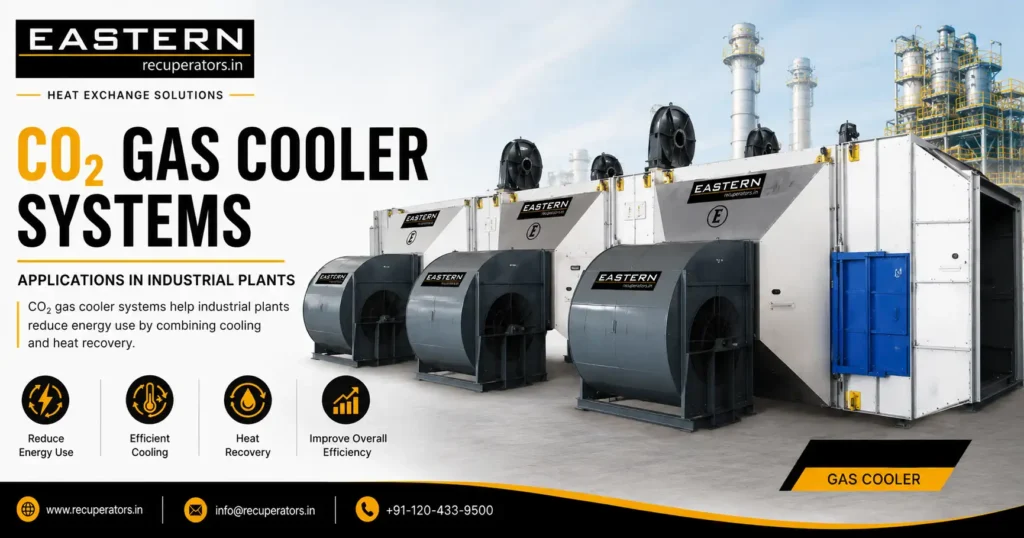
CO2 gas cooler systems are becoming essential in modern industrial plants. Today, plant managers use these systems to reduce energy costs, meet environmental regulations, and improve overall process efficiency.
However, the real challenge is not whether to adopt CO2 cooling — it is how to implement a system that delivers measurable performance without disrupting operations.
When designed appropriately, CO2-based systems meet that need exactly.
What is a CO2 gas cooler system?
A CO2 gas cooler system is an industrial cooling solution that removes heat using carbon dioxide in a transcritical cycle. It cools process gases while enabling heat recovery, improving overall energy efficiency.
How a CO2 Gas Cooler Works in Industrial Plants
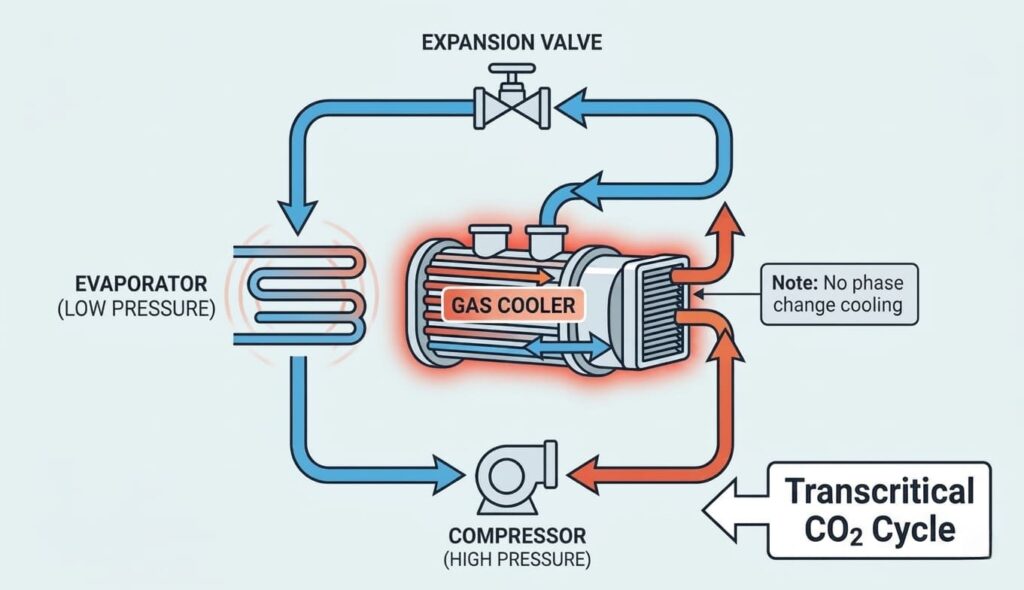
A CO2 gas cooler works in a transcritical cycle, which means that carbon dioxide stays in a supercritical state while it cools down. Unlike traditional systems, a CO2 gas cooler removes heat without changing phase. Instead, it uses controlled temperature glide across a gas cooler heat exchanger.
This difference directly affects performance. It has a direct effect on how energy moves through an industrial operation.
A well-designed CO2 gas chiller system does three things at once:
- Rejects process heat in an effective way
- Allows for structured heat recovery for other uses
- Keeps operating conditions steady even when loads change
The result isn’t merely cooling. The result is that energy is used more efficiently across activities that are linked together.
Why industrial decision-makers revaluating cooling systems?
People used to think of cooling systems as support utilities. That way of thinking is changing.
In 2026, plant operators are looking at cooling systems as a major factor in:
- Lowering the cost of energy
- Managing your carbon impact
- Stability of the process
- Following the rules
The International Energy Agency says that making industries more efficient may cut global energy use by more than 12% over the next ten years.
CO2 systems are in line with that goal because they do more than merely remove heat. They turn extra thermal energy into useful input for other operations.
The actual value is in the change from getting rid of heat to using it.
Where CO2 Gas Cooler Systems Make a Difference
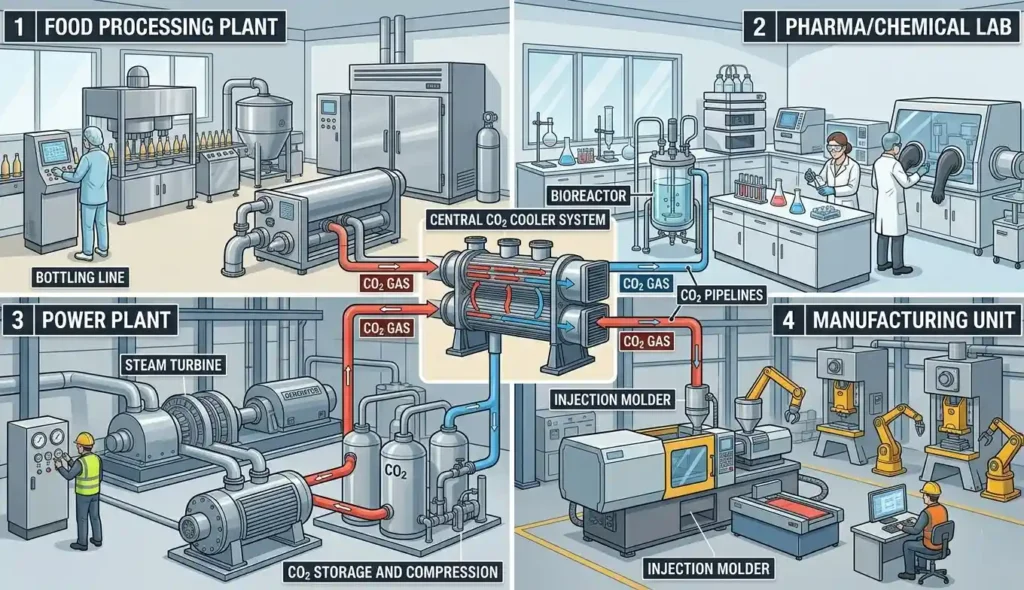
- Infrastructure for food processing and the cold chain
Food processing plants have constant thermal loads at different phases of the process. The need for hot water and cleaning cycles is always there, much like the need for cooling.
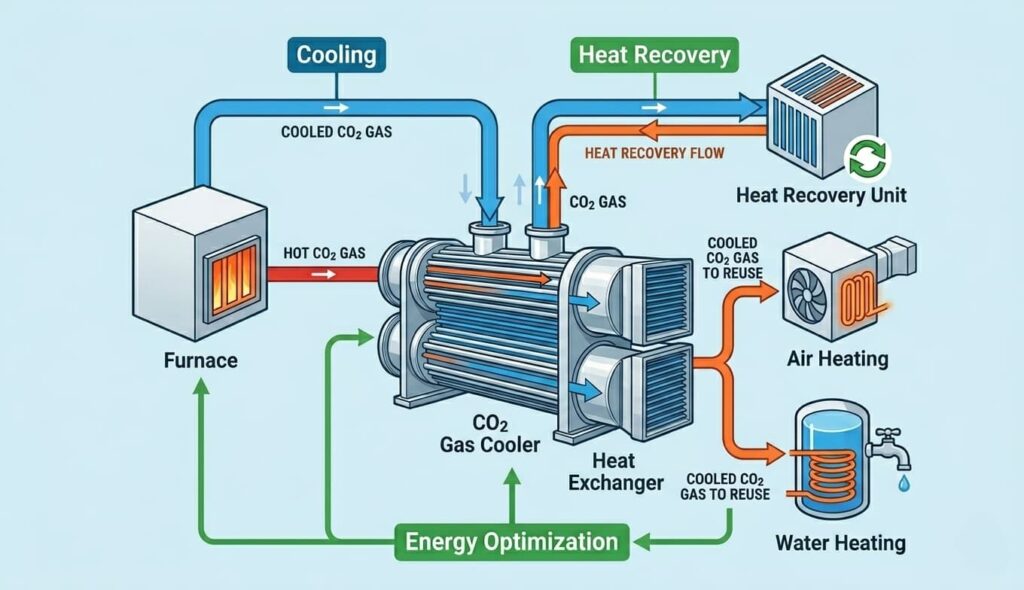
A CO2 gas cooler may cool and recover heat at the same time. You can send the recovered heat to cleaning systems, heating water, or conditioning the air.
This cuts down on the need for separate heating systems and makes the plant’s energy balance better.
Manufacturing chemicals and drugs
In chemical and pharmaceutical industries, controlling the temperature directly affects the quality and safety of the products.
CO2 systems let you control the temperature very precisely even when the process loads change. The gas cooler heat exchanger makes sure that heat is removed in a controlled way without causing pressure or temperature profiles to become unstable.
This level of control is not optional for plants that work with delicate substances. It is really important.
Facilities for generating power and energy
Power plants make a lot of waste heat. Most processes release heat into the air.
A CO2 gas cooler lets plant operators take some of the heat energy and use it for other purposes, such heating feedwater or space.
This makes the plant work better overall and makes it less reliant on fuel over time.
Environments for Continuous Manufacturing
Industries like textiles, plastics, and metals have production cycles that never stop, therefore downtime is not an option.
CO2 cooling systems work well even when there is a lot of load. Industries in Spain are adopting gas cooler systems rapidly use of these products as enterprises deal with rising energy costs and higher environmental standards.
Because the system is reliable and easy to maintain, it is good for operations that need to be up all the time.
Why the design of the gas cooler heat exchanger is important for success?
Most industrial evaluations still focus on compressors and how the system is set up. That way of thinking leaves out an important part.
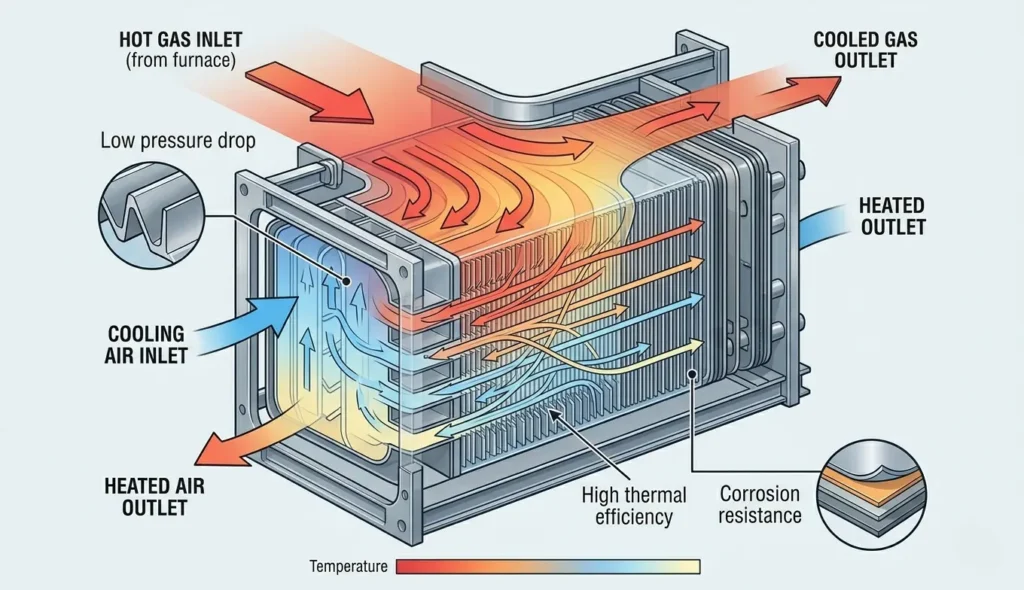
The gas cooler heat exchanger determines how well heat is transmitted and how well the system holds up under stress.
A designed heat exchanger design makes sure:
- The technology can control the temperature as it glides across.
- Less pressure loss
- Thermal performance that stays the same even when the load changes
- Resistant to corrosion and fouling
Even a well-built CO2 system won’t work successfully without a well designed heat exchanger.
This is where engineering knowledge makes a difference.
What we learn from the Gas Cooler Spain Market?
The gas cooler Spain market is growing quickly, and this isn’t by chance. It is pushed by a mix of rules and the need for money.
Because of the following reasons, industrial operators in Spain are using CO2 systems:
- We are getting rid of synthetic refrigerants.
- Higher efficiency is needed because of increased energy costs.
- Policies make sure that sustainability goals are met.
What matters to decision makers outside of Europe is not the rules themselves. The most important thing to remember is the direction of the plan for cooling industry.
Markets that change early get benefits in terms of efficiency before rules make the change necessary.
Things to Think About Before Installing a CO2 Gas Cooler System
You shouldn’t think of a CO2 gas cooler system as a plug-and-play alternative. It needs a structured review.
People who make decisions should think about:
- Ambient operational conditions and maximum temperature profiles
- Combining with current fluxes of process heat
- Possibilities for using heat recovery
- Designing system pressure and keeping people safe
- Cost of running over time versus initial investment
The difference between a regular installation and a high-performance system is how these factors are designed at the beginning.
The Strategic Change to Integrated Energy Systems
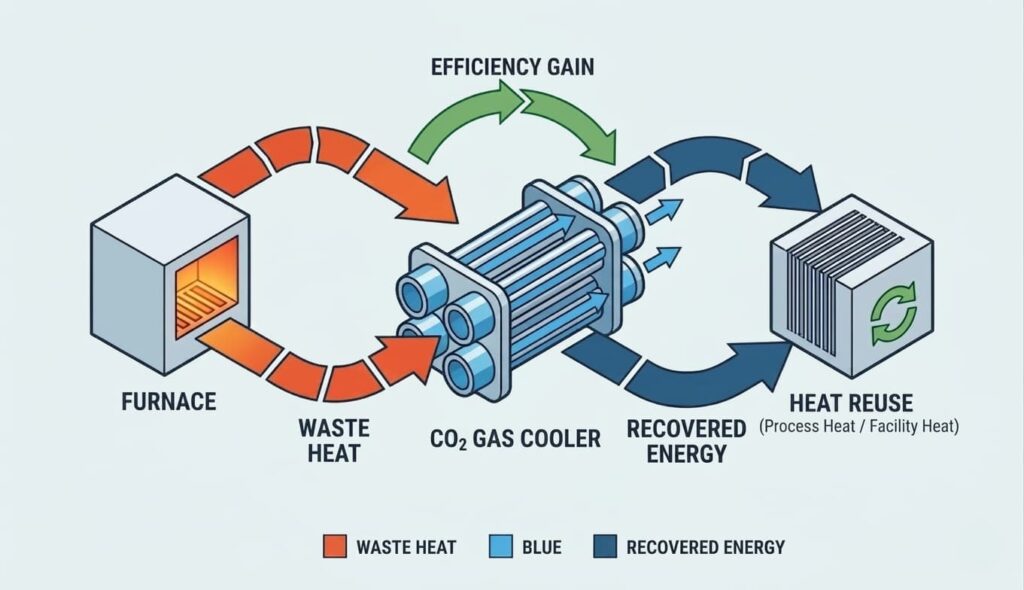
Controlling the temperature is not the only thing that will happen in the future of industrial cooling. It is going toward integrated energy systems where heating, cooling, and energy recovery all work together.
The CO2 gas cooler is a key part of that change.
Not only are plants that use these kinds of technologies using less energy. They are making their operations more resilient to rising energy costs and stricter environmental rules.
That change is already happening in Europe and is picking up speed in Asia.
Conclusion
Industrial cooling is no longer a utility that runs in the background. It is a strategic role that has a direct effect on cost, efficiency, and sustainability.
The CO2 gas cooler can change the way industrial operations use thermal energy. The technology provides more value than just cooling by decreasing waste heat and allowing for process integration.
When decision makers look at infrastructure that is fit for the future, they shouldn’t focus on replacing old systems. The main goal should be to change how energy flows through the facility.
That’s where CO2 systems have a clear edge.
If your plant still sees cooling as a separate service, you are probably missing out on demonstrable efficiency.
EASTERN Recuperators helps businesses redesign how they handle heat in their processes. They know more than just how to sell equipment. They design gas cooler heat exchanger systems that work with your plant’s thermal profile and turn waste heat sources into usable electricity.
Frequently Asked Questions:
How can a CO2 gas cooler make a facility work better?
A CO2 gas cooler lets industrial plants reuse thermal energy instead of throwing it out altogether. It does this by cooling and recovering heat at the same time.
Is CO2 safe to use in industrial settings with high temperatures?
Yes, CO2 systems are built to work under high pressure and can tolerate tough industrial circumstances while still working well.
What does the gas cooler heat exchanger do?
The gas cooler heat exchanger governs how well heat is transmitted, which has a direct effect on the system’s performance, stability, and energy use.
Why is the market for gas coolers in Spain growing so quickly?
Due to severe environmental rules and the need to cut energy costs with better cooling systems, businesses in Spain are starting to use CO2 systems.
What should you do initially before putting up a CO2 cooling system?
The first step is to look closely at the plant’s thermal profile, which includes heat sources, cooling needs, and chances to recover heat.
Find out how your facility can switch to a CO2 cooling method that works better.