
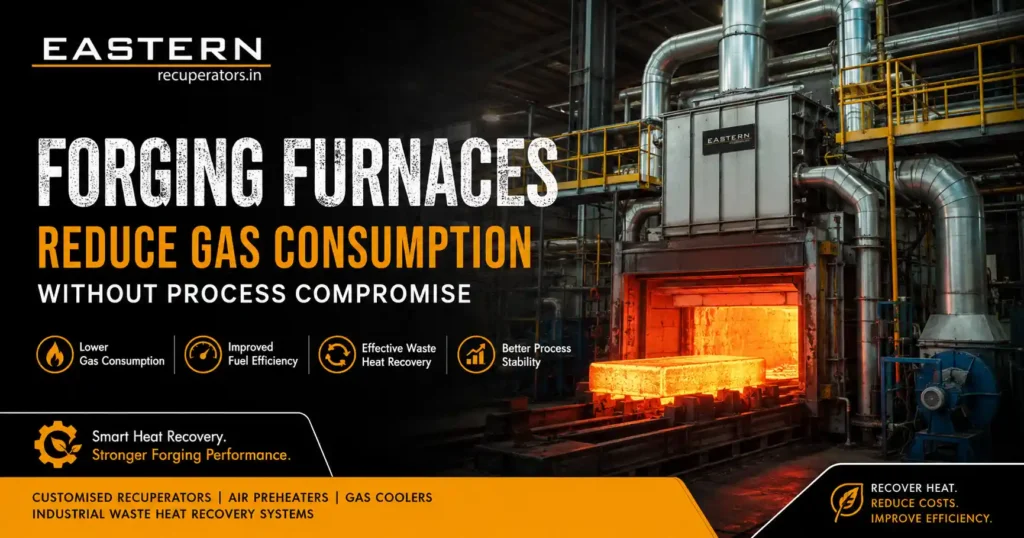
Recuperators in forging furnaces improve fuel efficiency by recovering exhaust heat and using it to preheat combustion air. This reduces gas consumption, improves thermal performance, and maintains stable forging operations without affecting production quality.
Forging furnaces are among the most energy-intensive heating systems in industrial production, heating metal to extreme temperatures before shaping and forming. Gas is also used in the automotive, heavy engineering, and steel manufacturing industries, where its use directly influences production costs and efficiency. Much of the heat escapes via exhaust gases. The U.S. Department of Energy estimates industrial heat recovery can cut energy use by up to 50% making recuperators essential for forging operations.
Therefore, for industries running forging furnaces, reducing gas consumption is not about lowering furnace temperature or cutting production. It is concerned with enhancing heat recovery and reuse. It is at this point that recuperators come in. Reverting the exhaust heat and using it to combust the fuel enhances fuel efficiency, reinforces energy efficiency, and lowers gas usage without compromising forging quality or production stability.
Why Gas Consumption Is High in Forging Furnaces
The demand of fuel in forging processes is also high since the furnace needs to have constant and uniform high temperatures. However, much of this heat is usually wasted even under normal operation.
- High Exhaust Heat Loss
Valuable thermal energy is contained in hot flue gases exiting forging furnaces. In the absence of waste heat recovery, the system simply loses this energy to the atmosphere.
- Continuous Furnace Operation
Forging plants are in operation most of the time and this increases the amount of gas used in long production cycles.
- Cold Combustion Air Supply
The burners need additional fuel to reach the process temperature when burners draw ambient-temperature air into the combustion chamber.
- Heat Leakage Through Furnace Structure
Inadequate insulation and broken refractory lining enhance heat loss and fuel consumption. Consequently, these operational losses have a direct impact on production cost.
How Recuperators Work in Forging Furnaces?
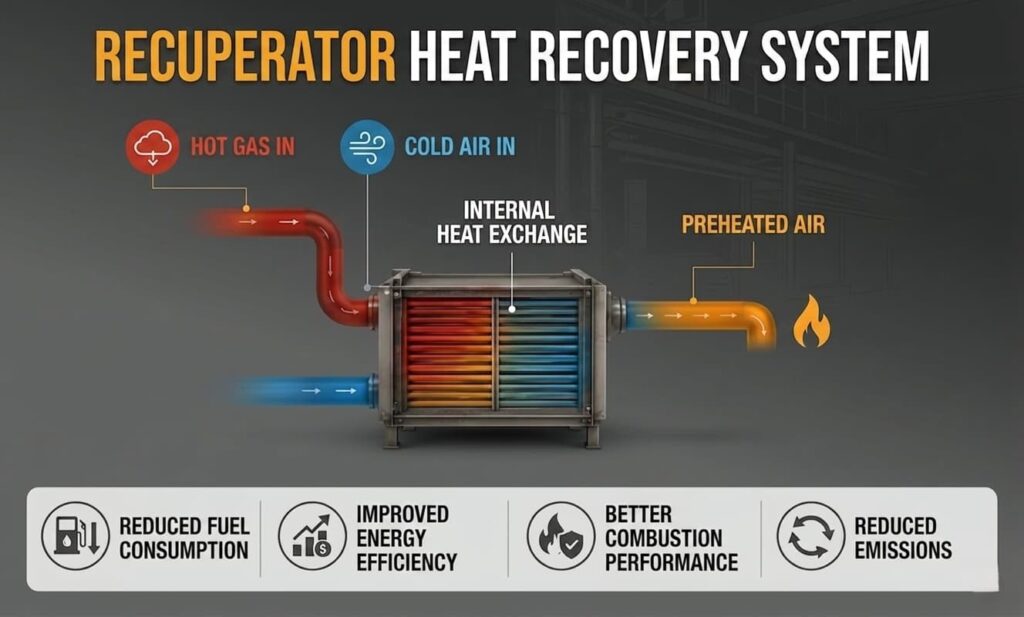
Recuperators are heat-recovery equipment that extract heat from exhaust gases and transfer it to incoming combustion air. As a result, this process directly reduces fuel consumption in forging furnaces.
Exhaust Heat Is Captured
The hot flue gas leaving the furnace passes through the recuperator unit.
Fresh Air Receives the Heat
Incoming combustion air flows through separate channels and absorbs the recovered heat.
Preheated Air Improves Combustion
Hotter combustion air improves burner performance and reduces gas demand.
Heat Is Reused Instead of Wasted
This provides an efficient energy recovery system within the furnace cycle.
Why Waste Heat Recovery Matters in Forging Operations?
One of the largest issues in the forging process is fuel cost, since the heating patterns consume a lot of energy. Therefore, waste heat recovery stands among the most feasible solutions for lowering operational costs.
Reduces Fuel Demand
Recycled heat reduces the amount of fresh gas required for combustion.
Improves Energy Efficiency
Better heat utilisation improves total furnace performance.
Supports Stable Heating Cycles
Similarly, heat recovery improves flame stability and process consistency.
Lowers Production Cost
Reduced gas consumption improves profitability. Indeed, this makes heat recovery a valuable long-term operational strategy.
Key Benefits of Recuperators in Forging Furnaces
Specifically, recuperators deliver quantifiable gains in fuel efficiency and process reliability. These advantages directly contribute to the long-term efficiency of industries with forging furnaces.
- Improved Fuel Efficiency
Preheated combustion air improves heat generation while reducing gas consumption.
- Better Energy Efficiency
Recovered heat improves thermal performance and reduces waste.
- Stable Process Heating
Better flame quality improves forging consistency and product quality.
- Reduced Exhaust Heat Loss
Recuperators capture heat that would normally escape through the chimney and redirect it back into the process.
- Lower Cost Per Production Cycle
Reduced gas demand lowers operational costs.
Forging Furnaces vs Heat Treatment Furnace: Heat Recovery Difference
Forging furnace and heat treatment furnace are both thermal energy metal processing machines; however, they have different heat recovery needs. Specifically, forging processes require more heat and faster heating cycles. As a result, recuperators deliver greater value here than in lower-intensity applications.
Higher Heat Requirement: Forging requires stronger heat input compared to controlled heat treatment.
Greater Fuel Consumption: Forging cycles consume more gas due to aggressive heating requirements.
Faster Return on Investment: The increased consumption of fuel implies accelerated heat recovery savings.
Real Example: Fuel Reduction in a Forging Furnace
A medium sized forging unit in India fitted a recuperator unit in its gas fired furnace to enhance fuel management. The metal was constantly heated in the furnace and then forged. A thermal audit recorded exhaust gas temperatures above 700°C.
Problem Before Installation
The furnace consumed high volumes of gas and suffered from uneven heating cycles.
Recuperator Installation
The plant connected a customised recuperator directly to the combustion air line.
Results Achieved
The plant reduced gas consumption by nearly 30% while maintaining the same production output.
Better Process Stability
After installation, the furnace was more consistent in terms of temperature.
Conclusion
One of the largest operational objectives for industries using forging furnaces is to reduce gas consumption without compromising production quality. Specifically, recuperators make this possible by recovering exhaust heat and converting it into useful combustion energy.
Consequently, fuel and energy efficiency improve while long-term costs drop without affecting forging performance.
EASTERN Recuperators manufactures customised recuperators, air preheaters, gas coolers, and industrial waste-heat recovery systems for forging furnaces, heat treatment plants, and industrial heating systems. We have enhanced our designed systems to improve heat recovery and fuel economy optimisation in challenging industrial processes.
FAQ (Frequently Asked Questions)
How do recuperators improve forging furnaces?
Recuperators improve forging furnaces by recovering exhaust heat and using it to preheat combustion air, reducing gas consumption.
How much gas can be saved in forging furnaces?
Gas savings depend on furnace conditions, but many forging operations achieve a 30-45% reduction.
Is waste heat recovery suitable for forging operations?
Yes, waste heat recovery is highly effective because forging furnaces operate at high exhaust temperatures.
How does an energy recovery system improve fuel efficiency?
An energy recovery system captures and reuses waste heat, reducing fuel demand and improving thermal performance.
Can recuperators be used in heat treatment furnace systems?
Yes, recuperators are also effective in heat treatment furnace applications for improving fuel efficiency and reducing heat loss.