Heat recovery is essential to any process if it is to be considered efficient industrial heating. In fact, thermal energy is lost in vast quantities through exhaust systems, furnaces, and process heating cycles in modern industrial manufacturing. However, the way this process is implemented varies by industry. Specifically, steel, ceramics, and aluminium have different operating temperature ranges, fuel requirements, and thermal properties.
The difference is important because a recovery system that succeeds in one industry may not succeed in another. How waste heat recovery should be designed depends on the furnace structure, the quality of the exhaust heat, the production cycle, etc. That is why industry-specific recovery systems make better energy recovery and improved thermal efficiency.
What Is Industrial Heat Recovery?
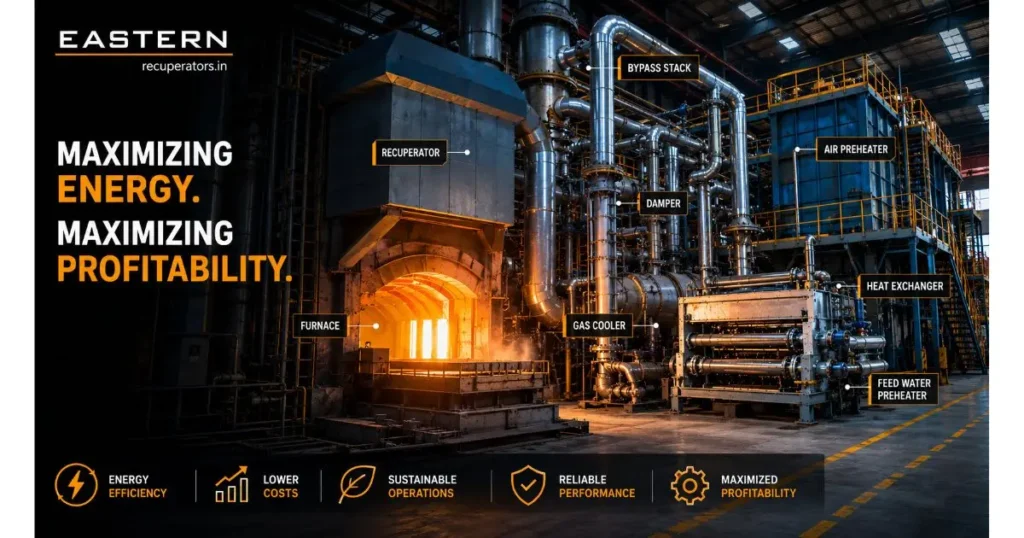
The benefit of this system is to capture unused thermal energy from industrial processes and reuse it to manufacture products. These systems capture exhaust heat for combustion or process support rather than letting it go to waste.
This directly lowers fuel use across high-heat industries. The U.S. Department of Energy estimates that waste heat recovery can reduce industrial energy consumption by up to 50%.
These systems serve the following main functions:
- Capture waste heat
- Improve fuel efficiency
- Reduce energy loss
- Provide a better transfer of heat
Why Heat Recovery Changes Across Industries?
All industrial processes generate a different kind of heat or exhaust behaviour. That’s why recovery systems need to be flexible based on industry needs.
Temperature Range Changes
Recovery systems are engineered differently across industries depending on the thermal level, given differences in available heat.
Exhaust Gas Quality Differs
Exhausts contain different chemicals and temperatures based on the type of material and fuel.
Furnace Design Varies
Each industrial furnace operates in a unique manner which has an impact on the manner in which waste heat is captured.
Process Heating Cycles Are Different
Recovery efficiency is influenced by some industries operating continuously and others operating in batches.
Heat Recovery in the Steel Industry
Indeed, the steel industry has one of the highest energy intensities among all manufacturing sectors. As a result, wast recovery is one of the most important efficiency measures for steel production, given the extremely high temperatures involved.
The exhaust heat from steel furnaces is hot, which provides greater recovery opportunities.
Continuous Process Advantage
Consistent thermal flow with continuous production leads to consistent energy recovery.
Larger Furnace Systems
Bigger industrial furnace structures generate higher thermal output and higher recoverable heat.
Stronger Heat Exchanger Demand
The high thermal pressure requires a durable heat exchanger design for the steel recovery system.
Heat Recovery in Ceramic Manufacturing
Production of ceramics differs because of the many factors that depend on firing temperature and the need to ensure product consistency.
- Batch-Based Heating Cycles
Ceramic kilns are not necessarily fired in a continuous batch as are steel kilns, but may have a time delay in heat recovery.
- Controlled Process Heating
Controlled process heating is important in ceramic production, where thermal stability is critical.
- Moderate to High Exhaust Heat
Ceramic kilns offer high thermal recovery potential, but with different exhaust flow patterns compared to steel.
- Better Heat Transfer Stability
Regular heat transfer ensures high firing quality and product consistency.
Heat Recovery in Aluminium Manufacturing
The recovery challenges in aluminium production are different as the material behaves differently and is thermally sensitive.
- Lower Process Temperature Than Steel
Aluminium requires reduced temperatures to melt but can still generate recoverable exhaust energy.
- High Energy Demand During Melting
The valuable thermal output from melting processes is available for reuse.
- Faster Process Cycles
The faster the heat recovery system performs, the shorter and more responsive the thermal cycles become.
- Sensitive Thermal Control
In the case of aluminium, overheating has an impact on the quality of the metal and it is important to recover it in a controlled manner.
Why Heat Exchanger Design Changes by Industry?
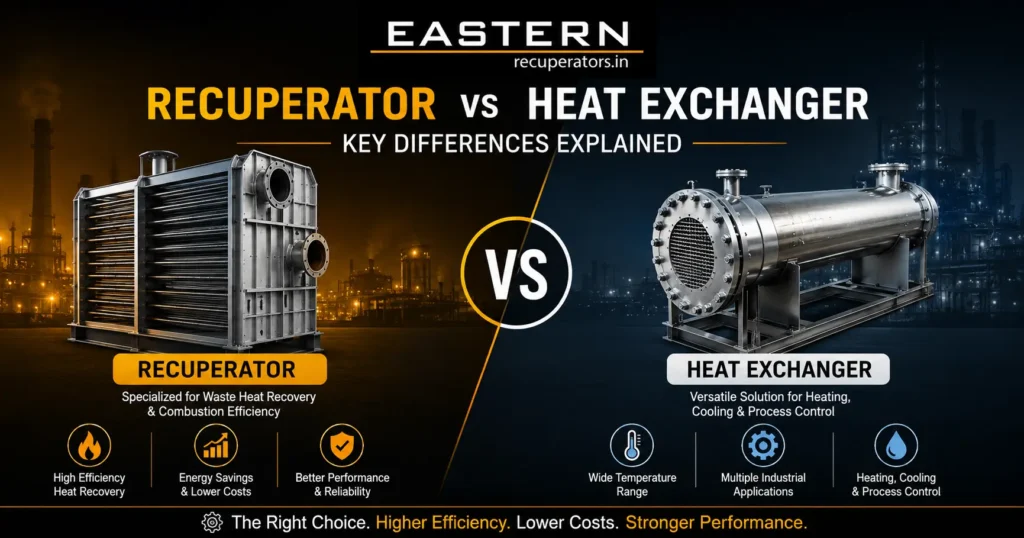
The design of a heat exchanger is a fundamental part of any recovery system, but it will vary according to the thermal load, the composition of the exhaust, and the operating cycle.
- Steel Needs Heavy-Duty Construction
Steel exhaust generates higher thermal pressure, which means a need for stronger materials for the heat exchanger.
- Ceramics Need Thermal Stability
Stable heat transfer is the priority in ceramic production, rather than aggressive extraction.
- Aluminium Needs Controlled Recovery
To maintain product quality, aluminium systems must have a balanced thermal recovery.
- Material Compatibility Matters
Various types of exhaust gases call for various materials of the heat exchanger.
Benefits of Industry-Specific Heat Recovery
The customised Heat recovery systems are superior in performance since they are based on actual process behaviour rather than generic thermal assumptions. Because of these differences, industry-specific heat recovery systems offer clear advantages:
- Better Energy Recovery
Customised systems perform more efficiently because they match actual furnace behaviour.
- Lower Fuel Consumption
As a result, recycled heat reduces the demand for fresh fuel across all process types.
- Better Overall Process Efficiency
Greater thermal utilisation leads to higher overall production efficiency.
- Improved Energy Saving in the Manufacturing Industry
Fuel savings positively contribute to cost control across the manufacturing industry.
Conclusion
For industries keen to save fuel and maintain operational control, heat recovery is no longer an option. However, thermal behaviour, exhaust flow, and heat transfer requirements differ substantially across steel, ceramic, and aluminium processes, so the way it works differs for each. Therefore, it is not possible to copy a system designed for steel directly into ceramic or aluminium production without a significant drop in efficiency.
That is why industry-specific thermal solutions matter for every sector. Companies such as EASTERN Recuperators can design a system that maximises energy recovery, optimises the performance of your industrial furnaces, and reduces fuel costs through smarter waste heat recovery engineering.
Frequently Asked Questions (FAQs)
What is different about Heat recovery for steel, ceramics and aluminium?
Heat recovery systems must be customised to be more efficient because each industry has its own furnace designs, process heating cycles and temperature levels.
What role does a heat exchanger play in industrial thermal systems?
A heat exchanger recovers waste heat from a fuel and transfers it into useful process heat, thereby improving fuel efficiency.
Does the batch process have a place for waste heat recovery?
Yes. With structured structured thermal recovery for each batch, even batch-based ceramic systems can benefit.
What industry has the greatest potential for thermal efficiency gains?
Industries with the highest direct fuel savings are typically the steel industry, due to the volume of exhaust heat, but all thermal industries benefit tremendously.
EASTERN Recuperators specialises in designing custom heat recovery systems that maximise energy efficiency and reduce fuel costs across industries.