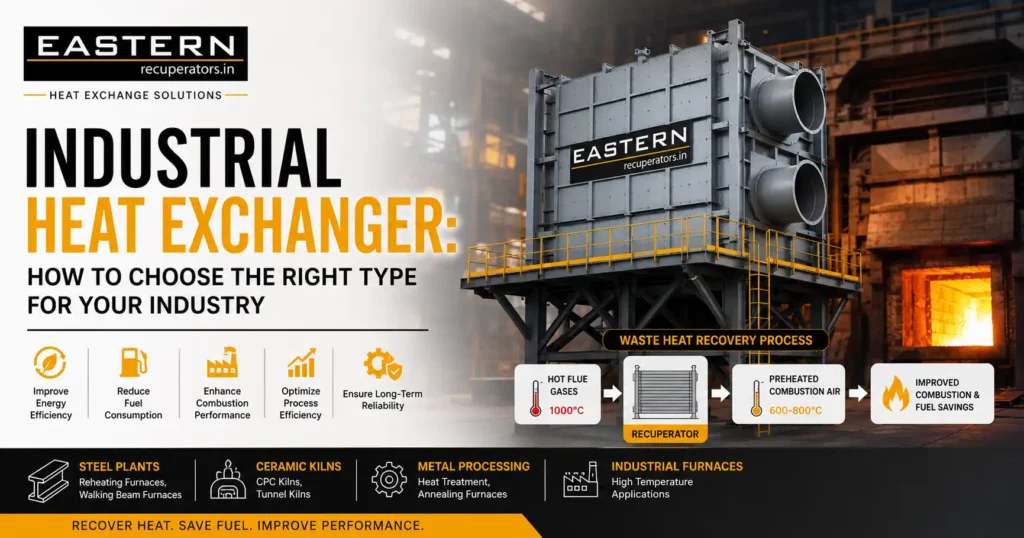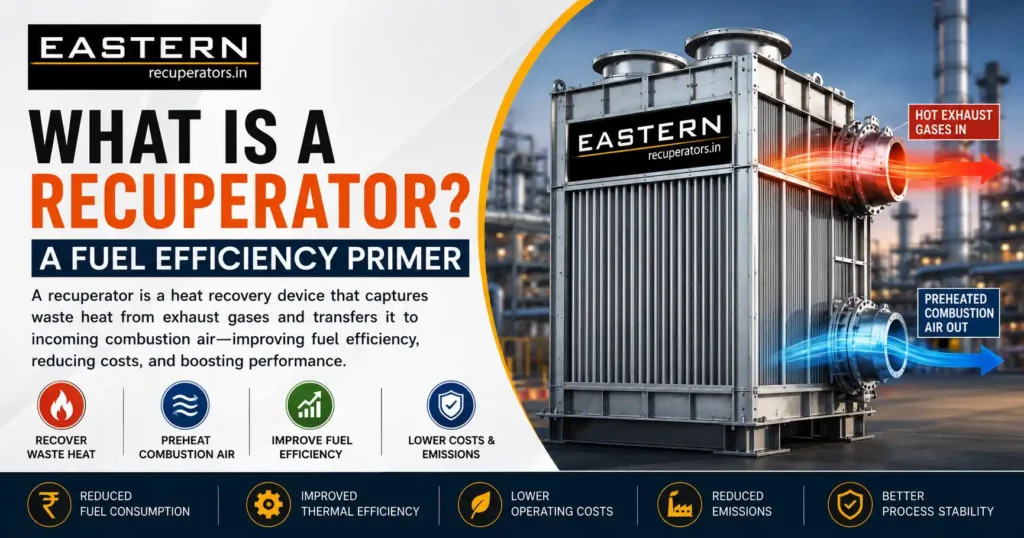
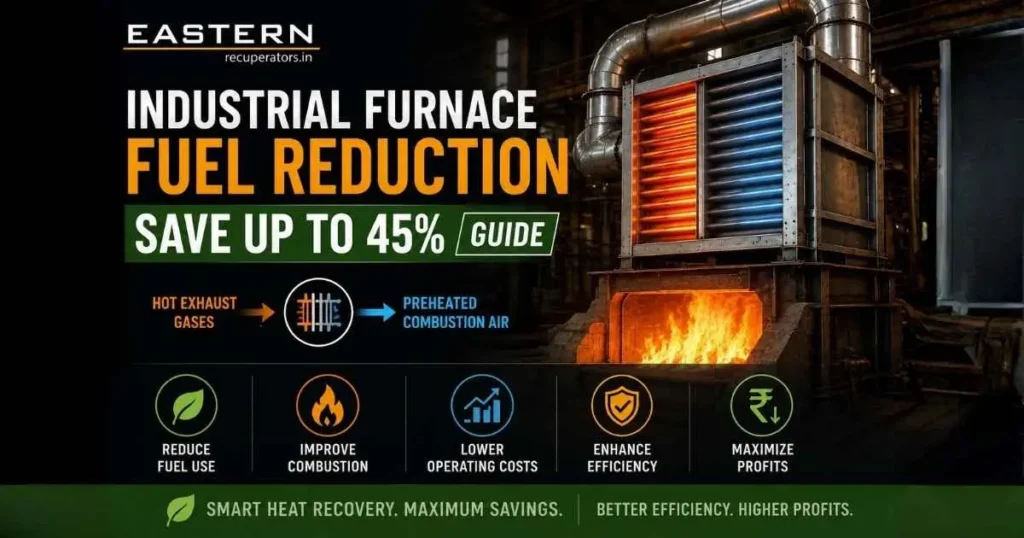
Industrial furnace fuel reduction is achieved by improving combustion efficiency, recovering exhaust heat, upgrading insulation, and optimizing furnace operations using recuperators and heat recovery systems.
Fuel cost is the highest operational expense in any industrial furnace. In sectors such as steel, forging, ceramics, and heat treatment, industrial furnace efficiency directly influences profitability. In sectors such as steel, forging, ceramics, and heat treatment, furnace efficiency directly influences profitability because fuel costs are a significant portion of production costs.
The issue is that even nowadays, many furnace systems still waste significant amounts of useful heat through exhaust gases, inefficient combustion, and ineffective thermal management.
In fact, a poorly-constructed industrial furnace does not simply use more fuel. It raises the cost of operation, the production regularity and decreases the overall efficiency of the plants.
The positive aspect is that the practical implementation of heat recovery, combustion control, insulation, and process planning can help industries to reduce fuel consumption by 45%. This is not about cutting production. Instead, it is about improving heat generation, transferring it efficiently, and reusing it.
Top Reasons Fuel Loss Happens in an Industrial Furnace
Industries need to know where fuel is lost before it can cut on its fuel consumption. The majority of furnace systems waste energy in predictable area is found and determining these areas can assist in developing the appropriate efficiency strategy.
Heat Loss Through Flue Gas Exhaust
Hot exhaust gas exiting the system without heat recovery is one of the largest contributors of fuel loss in an industrial furnace. These gases carry substantial thermal energy. The U.S. Department of Energy confirms that recovering this heat can cut industrial furnace fuel use by up to 50%. As a result, without a recovery system, the furnace burns more fuel to maintain the necessary temperature.
Improper Air-Fuel Ratio
The proper ratio of fuel and air is necessary for combustion. When there is more air in the system, there will be less flame temperature and more fuel will be used up. When there is an inadequacy of air, the burning is not complete and the burning of fuel is not efficient.
Poor Insulation and Heat Leakage
Additionally, crumpled refractory lining, ineffective door seals, and ineffective insulation lead to heat leaking away all through. As a result, this heat loss forces the furnace to burn more fuel to maintain process temperature.
Burner Performance Issues
Dirty, poorly maintained, or improperly tuned burners produce unstable flames and poor heat output. Indeed, burner condition is a direct cause of lowered combustion efficiency.
How to Install a Furnace Heat Recovery System?
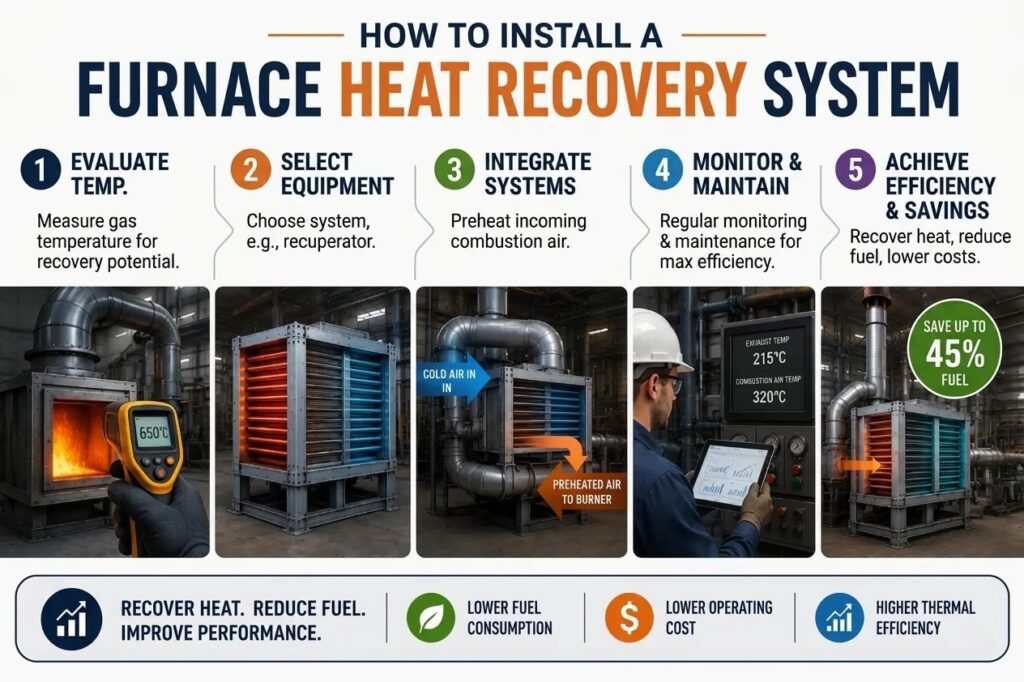
Indeed, one of the best methods for minimising fuel consumption is a furnace heat recovery system, which converts wasted exhaust heat into useful thermal energy. Specifically, the first step involves determining recoverable heat and selecting the appropriate system for your furnace type.
Evaluate Exhaust Temperature
The initial one is measuring exhaust gas temperature. The exhaust temperature is high, which implies a greater potential of heat recovery. This test assists engineers in ascertaining the potential fuel savings.
Select the Right Recovery Equipment
Various systems employ varying heat recovery systems. The most popular choice is recuperators, as they can divert exhaust heat into incoming combustion air to enhance fuel efficiency.
Integrate With Combustion Air Systems
The system channels recovered heat into fresh combustion air. This preheated air reduces the fuel requirement of the burners because the furnace air is at a high temperature.
Monitor and Maintain the System
Regular checks keep the heat recovery system performing at full efficiency. Furthermore, measuring exhaust temperatures and combustion air performance ensures long-term efficiency.
Top Ways to Reduce Fuel Consumption in Your Industrial Furnace by Up to 45%
To reduce fuel consumption in an industrial furnace, industries need both equipment upgrades and operational improvements. A combination of methods gives the best results.
Improve Combustion Efficiency
One of the quickest ways to reduce fuel consumption is to improve combustion efficiency. Tuning of burners would provide the appropriate air-fuel ratio and uniform flame performance. This enhances heat production and minimises fuel consumption.
Install Recuperators for Heat Recovery
One of the best heat-recovery systems for furnaces is the recuperator. They trap exhaust heat and use it to preheat air entering the combustion chamber. This enhances the generation of heat and reduces fuel consumption. The method also generates quantifiable energy savings in continuous furnace operations.
Upgrade Furnace Insulation
Insulation is better, and it enhances the heat retention in the furnace chamber. Replace damaged refractory material and improve furnace door sealing to minimise heat leakage. This enhances thermal stability and minimises unwarranted fuel consumption.
Optimise Process Heating Cycles
Efficient process heating means providing the appropriate amount of heat at the appropriate time. Most industries are squandering fuel by operating longer heating shifts than necessary. An improved time schedule and heating minimise the unnecessary fuel consumption.
Improve Burner Maintenance
Clean and inspect burners regularly to improve combustion quality. Specifically, clean burners enhance fuel-air mixing, improving flame stability and reducing fuel consumption. The health has a direct positive impact on furnace operation.
Reduce Idle Running Time
Most furnaces continue to operate at high temperatures even during production stoppages. Minimising the idle time contributes to fuel savings and increases efficiency. When production is inactive, the furnace in the industry should burn fuel only when needed.
Use Automation for Better Control
Computerised temperature and combustion control systems minimise human error and enhance uniformity. As a result, more control translates directly to better heat management and greater fuel efficiency. The production quality is also enhanced through automation.
Conclusion
One of the most effective ways to control production costs and improve profitability in the long run is to reduce fuel consumption in an industrial furnace. Loss of fuel usually occurs due to preventable problems like wastage of exhaust heat, inefficient combustion, ineffective insulation, and ineffective heating of the processes.
Of all possible solutions, however, the most effective long-term option is a properly designed furnace heat-recovery system with recuperators that converts waste energy into reusable energy.
Thermal efficiency and fuel consumption can be greatly enhanced through improved combustion control, insulation upgrades, and more intelligent process planning, thereby achieving better thermal efficiency and lower fuel consumption across industries.
EASTERN Recuperators is an industrial manufacturer specialising in the production of recuperators, air preheaters, gas coolers, and waste heat recovery systems for furnace applications, heat treatment plants, forging lines, and blast furnaces. Our solutions enhance heat recovery and optimise fuel consumption across industrial processes.
Frequently Asked Questions (FAQ)
What causes high fuel consumption in an industrial furnace?
The loss of fuel in an industrial furnace occurs primarily due to exhaust loss, inefficient burning conditions, insufficient insulation, and burner efficiency.
How does a furnace heat recovery system improve efficiency?
A furnace heat recovery system captures waste heat and uses it to heat the combustion air, thereby reducing the amount of fuel consumed.
Can recuperators improve fuel efficiency?
Yes, recuperators enhance fuel efficiency by recovering exhaust heat and reducing fuel use in burners.
What is the importance of combustion efficiency in furnace systems?
Increased combustion efficiency enhances heat generation, minimises fuel wastage, and optimises furnace performance.
How often should furnace systems be maintained?
Consistent maintenance enhances furnace performance, facilitates heat recovery, and helps minimise energy use.