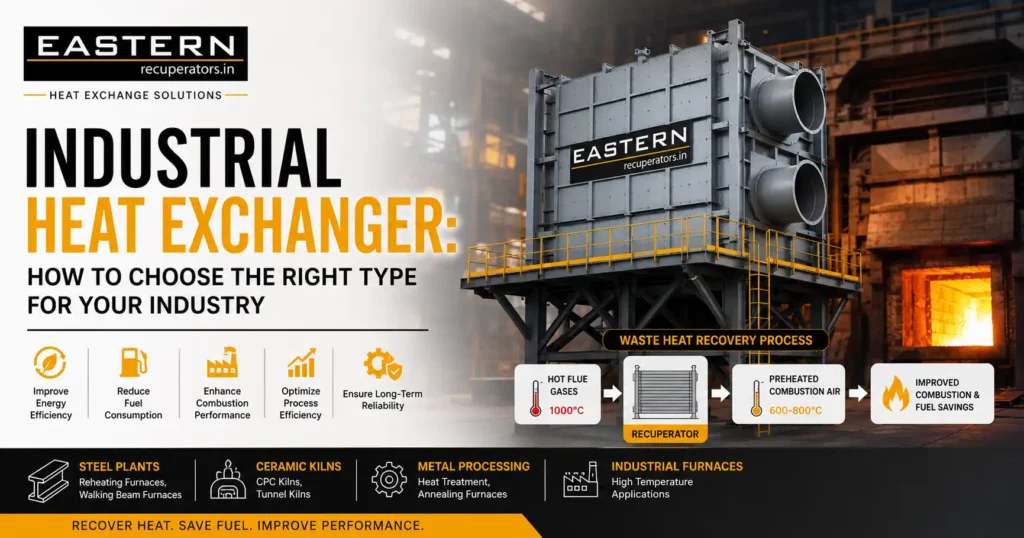
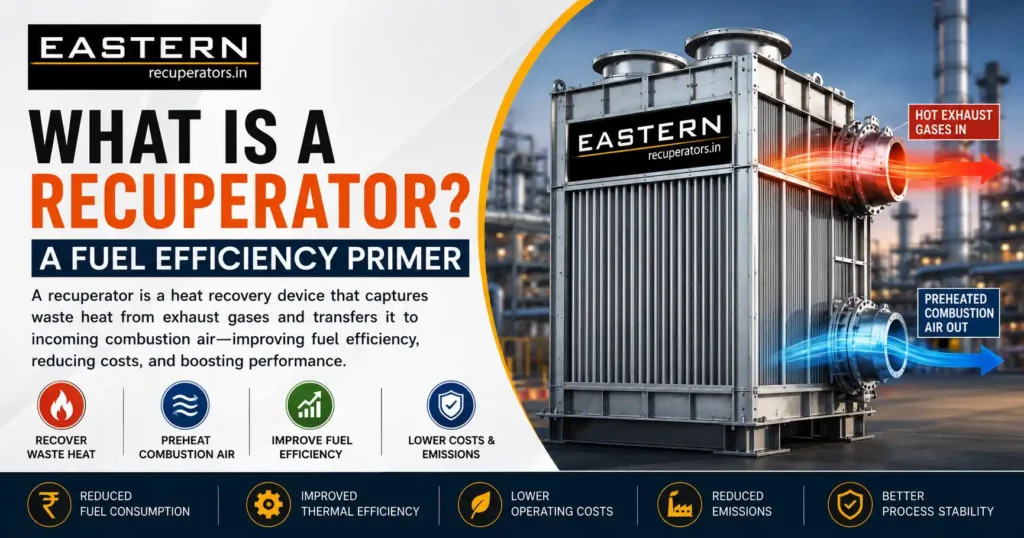
A recuperator is a heat recovery device that captures waste heat from exhaust gases and transfers it to incoming combustion air. This process improves fuel efficiency, reduces thermal energy loss, and lowers industrial operating costs.
To engineers, plant managers, and decision-makers, what a recuperator is not a mere question of equipment knowledge. Instead, it concerns managing fuel prices, enhancing thermal efficiency, and building a more sustainable industrial process.
Due to the continued increase in fuel prices and the higher efficiency targets required in 2026, heat recovery has ceased to be a matter of choice and has become an operationally necessary measure.
Recuperator Meaning in Industrial Engineering
In order to see the role of this system, it is significant to define the meaning of a recuperator in industrial terms.
A recuperator is a heat-exchange unit that recovers waste heat from exhaust gases and transfers it to incoming combustion air. Consequently, this process enhances combustion efficiency by reducing the fuel required to reach operating temperature.
In straightforward engineering language, it is a fuel-saving heat recovery system. Recovery recuperators harness usable thermal energy and recycle it back into the process, unlike conventional systems, where the exhaust heat is wasted. Therefore, they are essential for effective fuel management.
How Does a Recuperator Work?
The working mechanism will answer the question, ” What is a recuperator in a practical engineering approach?” The system operates via indirect heat transfer.
The exhaust gases are hot and flow through one side of the unit, while the incoming cold combustion air flows through the other. Without mixing of the two streams, the heat passes across the transfer surface. The system then feeds this preheated air directly into the combustion chamber.
Due to the high temperature of the combustion air, the fuel quantity required is less than that needed to reach the process temperature.
In effect, this cycle improves thermal performance while directly reducing fuel demand.
Why Fuel Efficiency Depends on Heat Recovery
One of the largest operating issues in industrial plants is fuel efficiency. A heat recuperator directly solves this by minimising wasted thermal energy.
When ambient-temperature combustion air enters the burner, the burner requires additional fuel to reach operating temperature. In contrast, pre-heated air significantly decreases this load. The outcome is a decrease in fuel consumption, improved combustion stability, and lower operating costs.
The U.S. Department of Energy has stated that recycling of industrial waste heat can greatly enhance the overall plant energy efficiency. Indeed, this shows why recuperators are increasingly critical in contemporary industrial design. Furthermore, in plants that run 24/7, even minimal gains in heat recovery generate significant annual savings.
Heat Exchanger vs Dedicated Recovery Unit: Key Differences
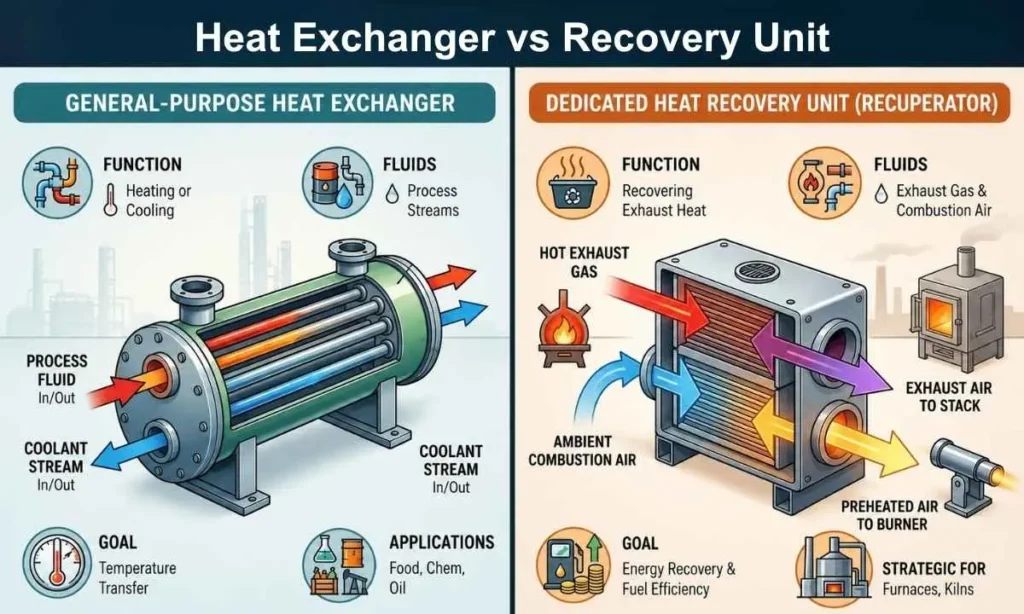
The question many engineers pose is whether a recuperator heat exchanger is any different from a normal heat exchanger. The answer, in fact, is yes.
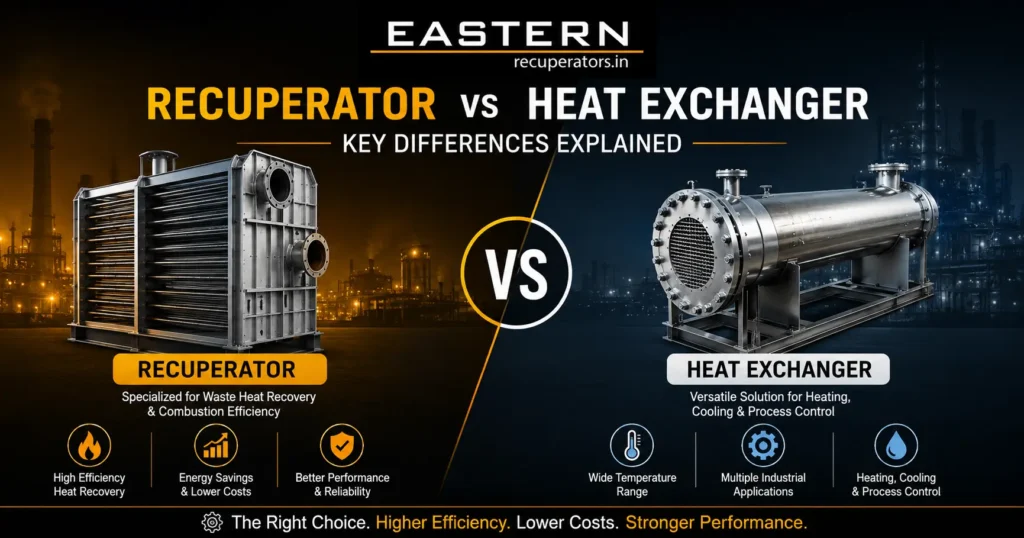
A recuperator is a kind of heat exchanger; however, it has a more specific purpose. General heat exchangers handle heating or cooling of process fluids. A recuperator is a special device that recovers exhaust heat and utilizes it to preheat combustion air.
This makes it very efficient for fuel-intensive processes such as furnaces and kilns. The design emphasis is on energy recovery, rather than temperature transfer. Such a difference puts the recuperator heat exchanger in a strategic position within the thermal system of the industry.
Recuperator in Furnace Applications
The recuperator is used in furnace systems and is one of the most common applications.
Specifically, exhaust gases from an industrial furnace carry extremely high temperatures. This energy is wasted to the atmosphere without heat recovery. As a result, a recuperator recaptures this heat and transfers it directly to incoming combustion air.
This enhances furnace performance, reduces burner load and lowers fuel consumption.
The steel, ceramics, and glass manufacturing industries are the largest consumers of recuperators because of the high fuel consumption during furnace operations. The heat recovery in furnace systems is directly proportional to profitability.
Recuperator in Gas Turbine Systems
The purpose of a recuperator gas turbine is also critical in the generation of power.
Gas turbines work with the help of compressing the air, mixing it with fuel and producing the power by combustion.
A recuperator enhances turbine performance by heating the compressed air with exhaust heat. This reduces the fuel requirement and keeps output consistent. This enhances the efficiency of the cycles and minimises the operating costs in high-performance energy systems.
A recuperator gas turbine system is especially useful when fuel optimisation is a priority.
Ventilation Systems and Heat Recovery: What Engineers Should Know
Although industrial combustion systems are the main users of recuperators, ventilation systems of a recuperator are also becoming more relevant.
Heat recovery is a component of ventilation systems that ensures efficiency in terms of temperature in buildings, where the system transfers heat between outgoing and incoming air streams.
This decreases heating and cooling loads in commercial and industrial buildings.Even though the application is not similar to the combustion systems, the principle is the same. Use the waste heat energy and lower energy wastage. This indicates the adaptability of recuperator technology in various industries.
Key Benefits of Using a Heat Recuperator
The most immediate gain is reduced fuel needs. Preheating the combustion air decreases the quantity of fuel required.
- Improved Thermal Efficiency
More efficient use of heat improves the system’s efficiency.
- Lower Operating Costs
The low use of fuel will reduce production costs in the long run.
- Reduced Emissions
Effective burning minimises the toxic effects.
- Better Process Stability
These advantages generate strong ROI in industries facing cost pressure.
Constant combustion temperatures enhance operational consistency.
Types of Recuperators Used in Industry
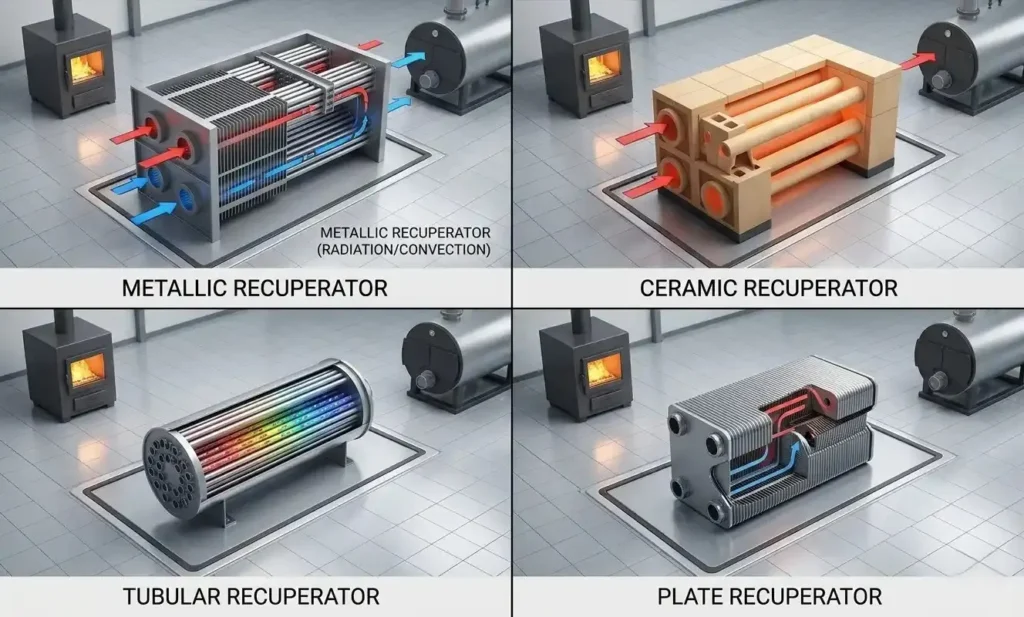
Various industrial systems use different recuperator designs.
- Metallic Recuperators: These use metal transfer surfaces and are suitable for moderate to high temperatures.
- Ceramic Recuperators: Engineers use them in extremely high-temperature applications where metals fail.
- Tubular Recuperators: Constructed with tube bundles to aid in the transfer of heat.
- Plate Recuperators: Minimal systems designed for installations with limited space. Engineers choose them based on operating conditions and fuel requirements.
Key Factors Before Any Heat Recovery Installation
A technical evaluation is needed when choosing the appropriate system.
- Operating Temperature
An increase in temperature enhances the potential of heat recovery.
- Fuel Type
The properties of fuels influence the needs of combustion and heat transfer.
- Space Availability
The space of installation influences the choice of design.
- Exhaust Gas Characteristics
Dust, corrosive gases, and moisture all influence material choice.
- ROI Expectations
Investment cost should be justified by fuel savings.
These considerations assist engineers in coming up with viable decisions.
Conclusion
But what is a recuperator in the real, practical industrial terms? It is a fuel efficiency aid, a cost control mechanism, and an operational benefit.
Recovering waste heat and reusing it to generate more combustion power, recuperators save fuel, enhance thermal efficiency, and lower operational costs.
In industries where energy efficiency is key to profitability, installing the appropriate recuperator system is a sound investment.
Recuperators is an engineering & design company with decades of experience in designing advanced recuperator systems that can be customised to achieve industrial performance. Our solutions are designed to recover as much heat as possible and enhance fuel efficiency under stressful conditions.
Frequently Asked Questions (FAQs)
What is a recuperator used for?
A recuperator is used to recover waste heat from exhaust gases and reuse it to preheat combustion air, improving industrial fuel efficiency.
What is a recuperator in an industrial system?
What is a recuperator in the industrial system? It is a heat recovery device that traps waste heat in exhaust gases and uses it to preheat combustion air to become fuel efficient.
What is the difference between a recuperator and a heat exchanger?
A recuperator is a heat exchanger designed to recover exhaust heat, which is then used to improve combustion efficiency. A general heat exchanger is a more general-purpose heat exchanger designed to serve a broader range of heating and cooling applications.
What does a heat recuperator do to enhance fuel efficiency?
A heat recuperator decreases the amount of fuel required because it preheats combustion air, thereby reducing the amount of energy needed to get the process temperature.
Is a recuperator applicable in ventilation systems?
Yes, recuperator ventilation systems recapture heat in outgoing air to enhance indoor energy efficiency and minimise heating or cooling loads.
What industries use recuperators?
Recuperators are commonly used in steel plants, furnaces, glass manufacturing, ceramics, and gas turbine systems.
When you intend to upgrade or install an EASTERN Recuperators, contact us today.