The convection vs radiation recuperator debate is one of the most critical design decisions in furnace heat recovery and the wrong choice directly impacts efficiency and equipment life. However, most industries invest in heat recovery systems without fully understanding how heat transfer varies with temperature. As a result, this leads to poor performance, reduced savings, and unnecessary maintenance costs.
In fact, the selection of the appropriate recuperator is not merely about heat recovery. It is a question of the right heat transfer mechanism for the operating conditions of your furnace. Therefore, understanding how convection and radiation work in industrial heat recovery is essential for the right decision.
What is Convection Heat Transfer?
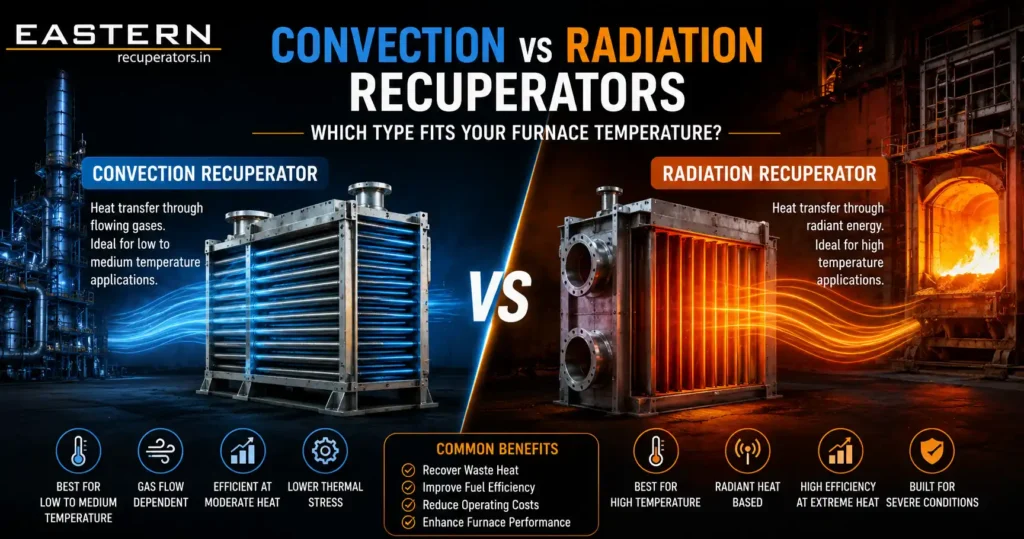
Convection heat transfer occurs when heat is transferred by the movement of fluids or gases.
Hot exhaust gases are used to heat the recuperator surface in furnace systems, and the impacting air absorbs the heat. Consequently, this is an effective heat transfer technique at moderate temperatures.
What is Radiation Heat Transfer?
To get an idea of what radiation heat transfer is, consider the heat transfer using electromagnetic waves. Radiation does not require physical contact or movement of fluids.
Radiant heat is far more powerful than convection at very high temperatures. According to the U.S. Department of Energy, optimising heat transfer mechanisms can significantly reduce industrial fuel consumption. Therefore, radiation-based recuperators suit high-temperature furnace environments particularly well.
What Are Convection Recuperators?
Convection recuperators are heat recovery units that recover heat by primarily using gas movement to recover heat. They are widely applied in cases where temperatures inside exhausts are average and the heat transfer in moving gases is effective. Convection recuperators in an industrial furnace move exhaust heat by surface to incoming combustion air, using metallic or ceramic surfaces.
As a result, this enhances combustion efficiency and minimises fuel consumption. Indeed, they rank among the most widely used industrial heat exchanger systems for waste heat recovery.
What Are Radiation Recuperators?
Radiation recuperators absorb heat primarily by absorbing radiant energy emitted by high-temperature exhaust gases. Manufacturers design these systems specifically for furnaces operating at higher temperatures.
They do not rely primarily on the movement of gases, but absorb direct radiant heat.
Radiation heat transfer in high-temperature furnace environments is greatly enhanced.
Consequently, radiation recuperators excel in aggressive high-temperature thermal recovery applications.
Core Difference: Convection vs Radiation
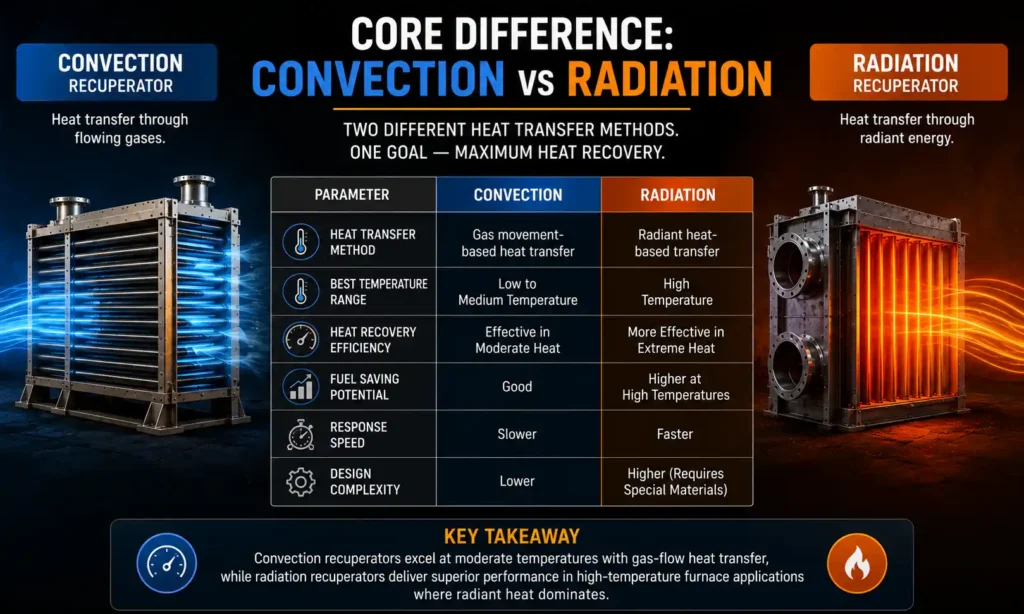
Comparing convection vs radiation recuperators becomes clearer when viewed through operating conditions and performance requirements. Both systems reclaim heat, however, furnace temperature is a key factor in their efficiency.
Heat Transfer Method
Convection recuperators rely on the flow of gases to transfer heat. As a resukt, Radiation recuperators rely on direct radiations of hot gases and this is the fundamental distinction between convection and radiation heat transfer.
Temperature Suitability
Convection systems work better with low to moderate temperatures. In contrast, the higher the temperature, the more efficient the radiation system becomes.
Heat Recovery Speed
At high temperatures, radiation transfer is more responsive because the thermal radiation intensity rises rapidly as the temperature increases. Under the identical conditions, convection is slower.
Design Complexity
Radiation recuperators typically involve the use of specialised materials because of high levels of heat exposure. By comparison, convection systems tend to be less structurally complicated.
When to Use Convection Recuperators?
Not any furnace needs a radiation-based system.
The convection recuperators are ideal for systems with moderately high temperature limits, and the gas flow is sufficient to transfer heat.
- Medium Temperature Industrial Furnaces: Moderate-flue-gas furnaces are favourable to convection-based recovery.
- Controlled Process Heating: Convection systems work well where there is a requirement of steady and slow heat transfer.
- Lower Maintenance Conditions: Convection systems typically experience reduced thermal stress compared to radiation systems.
As a result, this extends the life of the equipment significantly. Overall, convection recuperators deliver solid waste heat recovery across many industrial furnace applications.
When to Use Radiation Recuperators?
When the furnace temperature is exceptionally high, radiation recuperators are the preferred choice. Radiant heat energy is much more intense at high temperatures. Consequently, this enhances heat transfer efficiency at extreme temperatures.
- High-Temperature Furnaces: The steel, glass, and ceramic industries tend to work at temperatures where radiation is in control.
- Heavy Thermal Loads: Radiation systems are useful in processes that demand high thermal energy recuperation.
- Maximum Fuel Saving Applications: Radiation systems tend to provide higher recovery at elevated temperatures, where fuel savings are a factor. This is where the convection vs. radiation decision becomes commercially important.
Efficiency Comparison: Convection vs Radiation
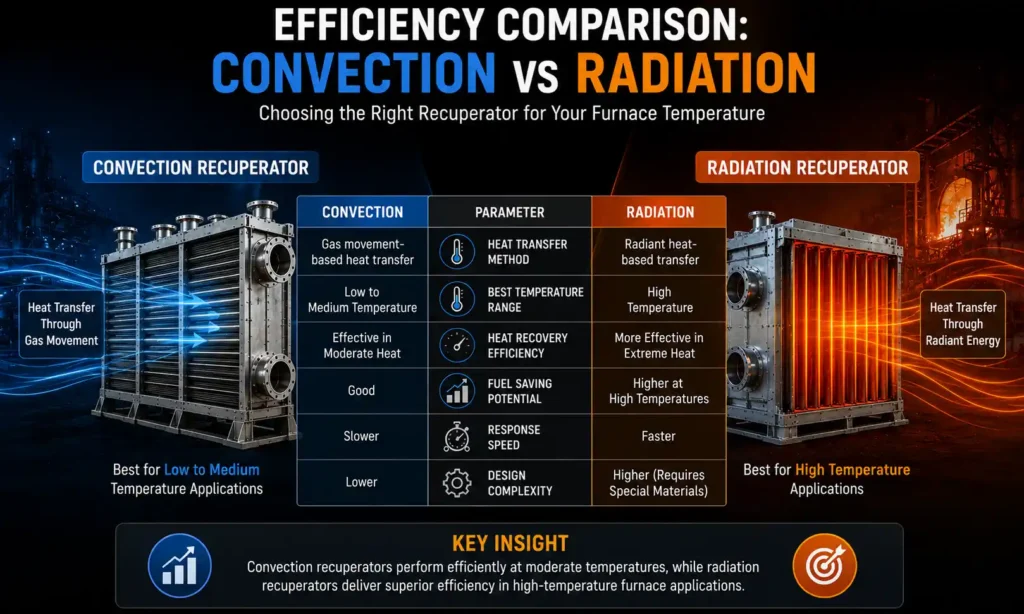
The efficiency of Convection vs radiation recuperators depends mainly on furnace temperature and heat recovery requirements. Convection works better at moderate temperatures, while radiation performs better in high-temperature furnace systems.
| Parameter | Convection Recuperators | Radiation Recuperators |
| Heat Transfer Method | Gas movement-based heat transfer | Radiant heat-based transfer |
| Best Temperature Range | Low to medium temperature | High temperature |
| Heat Recovery Efficiency | Effective in moderate heat | More effective in extreme heat |
| Fuel Saving Potential | Good | Higher at high temperatures |
| Response Speed | Slower | Faster |
How Convection vs Radiation Affects Recuperator Selection
The right choice is determined using various technical considerations.
- Operating Temperature: The first and the most crucial factor is this.
- Fuel Type: The fuel types generate varying exhaust conditions.
- Furnace Design: System integration is influenced by space and exhaust path design.
- Heat Recovery Goals: There are those industries that favour fuel conservation and others that are concerned with thermal control. These considerations assist engineers to make pragmatic decisions.
Convection vs Radiation: Conclusion
The decision of convection vs. radiation recuperators is based on one important factor, that is, furnace temperature.
Specifically, convection systems perform well at moderate temperatures and deliver reliable heat recovery. In contrast, radiation systems provide superior performance in high-temperature furnace applications where radiant heat dominates.
The correct choice enhances fuel efficiency, improves thermal performance, and reduces operating costs.
EASTERN Recuperators focuses on the design of customised recuperators, air preheaters, gas coolers and high-tech waste heat recovery systems for use in industrial furnaces. Our solutions are engineering-based and assist industries in selecting the appropriate heat-recovery system based on furnace type, process conditions, and fuel-efficiency objectives.
Frequently Asked Questions (FAQ)
What is the main difference between convection vs radiation recuperators?
The heat transfer method is the main difference between the Convection vs radiation recuperators. Convection relies on the movement of gases, whereas radiation relies on thermal radiation.
What is radiation heat transfer in furnace systems?
Radiative heat transfer is heat transfer by electromagnetic radiation, without contact or gas flow.
What is the most appropriate recuperator type to use in industrial furnaces?
The most appropriate choice depends on the furnace temperature. Medium temperatures are favourable for convection, and high temperatures are favourable for radiation.
How does waste heat recovery improve fuel efficiency?
Waste heat recovery is a system that captures heat from the exhaust and reuses it to minimise fuel use and increase thermal efficiency.
Is an industrial heat exchanger the same as a recuperator?
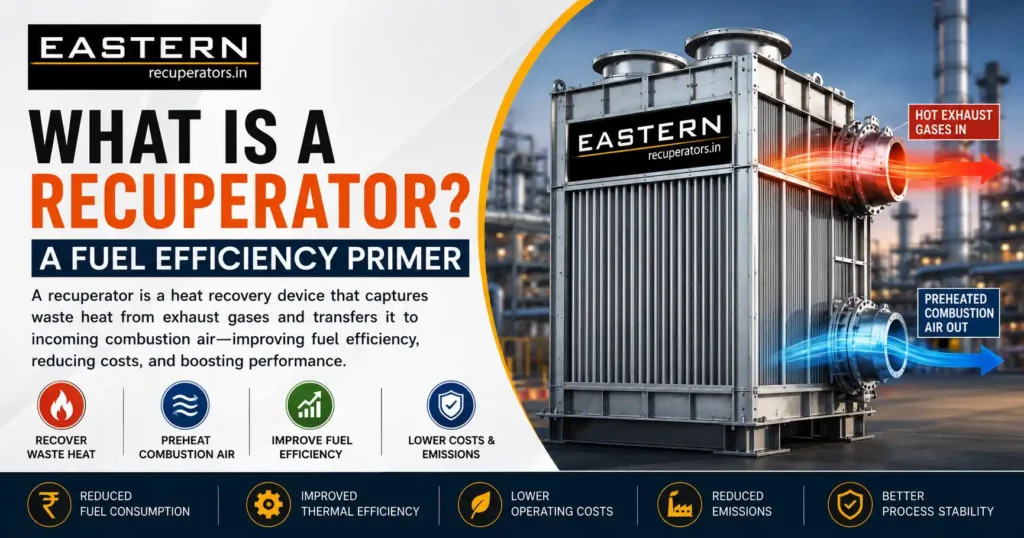
A recuperator is a special-purpose industrial heat exchanger designed to recover exhaust heat in furnace systems.