Ceramic manufacturing loses a significant portion of its energy as high-temperature exhaust gases that escape the kiln carrying unused thermal energy. Each firing cycle of a ceramic kiln produces a very high thermal output, and the exhaust airways lose much of this heat. This heat wastage directly contributes to fuel consumption and operating costs.
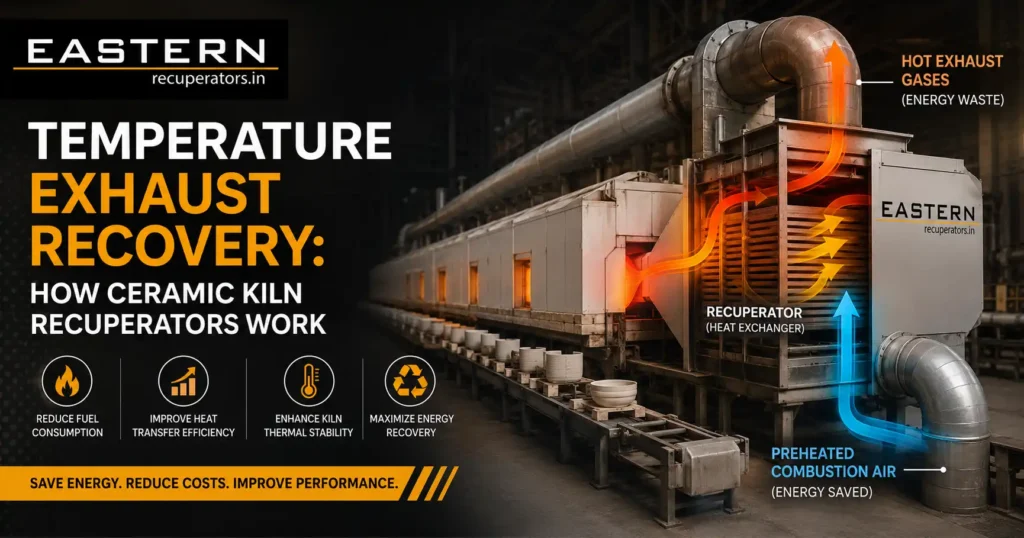
That’s where recuperators change the economics of kiln operation. Rather than letting the hot gases escape into the system unused, recuperators harness the temperature exhaust using industrial waste heat recovery systems and convert it into thermal energy that can be used. This enhances heat transfer, reduces reliance on fuel, and reinforces energy recuperation within the production cycle. That directly aids in the optimisation of industrial processes in energy-intensive industries.
What Is Heat Recovery in Ceramic Kilns?
Heat recovery entails reusing the exhaust heat that is not consumed in the kiln and channelling it back to the process. Specifically, the firing temperature in a ceramic kiln is very high; this means the exhaust gases exiting the kiln have high residual heat. Without energy recovery mechanisms, this energy simply goes to waste.
Recuperators achieve this using high-efficiency recuperators exhaust heat with fresh combustion air, thereby reducing the amount of fresh fuel required to reach operating temperature.
Main functions of kiln heat recovery:
- Harness the thermal energy of waste
- Improve combustion efficiency
- Reduce fuel use
- Enhance the thermal stability of the kiln
Why Ceramic Kilns Generate High Temperature Exhaust?
Ceramic kilns require high temperatures in order to work with materials correctly. The temperatures frequently rise above several hundred degrees during firing, and the kiln releases the unused portion through the exhaust system.
As a result, this is where heat loss happens.
Continuous High Heat Operation
For instance, a kiln is a ceramic oven that operates under a sustained thermal load, generating exhaust temperatures that remain constant across production cycles.
Fuel Combustion Creates Excess Thermal Output
Because the energy of combustion exceeds what the product absorbs, the kiln expels the excess as hot exhaust gases
Long Heating Cycles Increase Heat Loss
Furthermore, the more kiln cycles, the more exhaust heat that exits the system, resulting in larger recovery opportunities.
Traditional Systems Waste Energy
Without recovery systems, the kiln loses all this thermal energy without it contributing to any subsequent combustion cycle.
How Recuperators Handle High-Temperature Exhaust?
Recuperators are heat exchangers integrated with industrial air preheaters designed to absorb thermal energy from exhaust gases and reuse it in incoming air. Overall, this introduces a controlled heat-transfer process, which enhances fuel efficiency.
They Capture Exhaust Heat Before Release
Prior to the hot gases exiting the system, recuperators collect the exhaust heat and recapture some of its thermal content.
They Preheat Combustion Air
Consequently, the kiln consumes less fuel in every subsequent heating cycle.
They Improve Thermal Efficiency
Because of this, preheated air reaches combustion temperature quicker, enhancing efficiency of the flame and minimising waste.
They Stabilise Kiln Temperature
Recuperators ensure a more stable heat in the kiln during the production process by enhancing the consistency of combustion.
Why High-Temperature Exhaust Recovery Matters in Ceramic Manufacturing?
The concept of heat recovery is not merely about minimising waste. In fact, It alters the cost structure of ceramic production.
- Lower Fuel Consumption
When temperature exhaust is recovered, it directly decreases fuel consumption and, therefore, lowers operating costs.
- Better Energy Recovery
Rather than losing the thermal energy, recuperators generate some useful energy recovery within the kiln cycle.
- Faster Heating Cycles
Moreover, pretreated combustion air accelerates thermal accumulation enhancing production efficiency.
- Better Energy Saving in Industry
In fact, even a minor saving of heat results in significant yearly savings in thermal industries.
How Recuperators Improve Industrial Process Optimisation?
Temperature consistency, fuel efficiency and control of cycles are important to ceramic production. All three are supported by recuperators.
- Better Heat Transfer Efficiency
Recuperators enhance the heat exchange in outgoing gases and incoming air to give maximum use of thermal.
- Improved Thermal Stability
As a result, predominant preheating of combustion air enhances lot-to-lot consistency in firing.
- Reduced Thermal Losses
In addition, capturing exhaust heat reduces thermal waste and promotes overall system efficiency.
- Higher Production Efficiency
As a result, steadier and quicker firing cycles enhance throughput and aid optimisation of industrial processes.
Traditional Kiln vs Recuperator-Based Kiln
The distinction between the two systems is obvious when considering energy behavior.
| Factor | Traditional Kiln | Recuperator-Based Kiln |
| Exhaust Heat Usage | Wasted | Recovered |
| Fuel Consumption | Higher | Lower |
| Heat Transfer Efficiency | Lower | Higher |
| Thermal Stability | Less consistent | Better |
Common Challenges in Handling High Temperature Exhaust
Heat recovery of kiln exhaust is very useful, but must use systems built to operate under extremes.
Material Durability
Recuperators should be able to work under constant thermal load without efficiency loss.
Exhaust Flow Management
Equally, efective energy recovery requires proper design of gas flow.
Heat Resistance Requirements
Sustenance of high temperature exhaust puts strain on the structure, necessitating robust engineering.
Maintenance Planning
Operators must service heat recovery systems regularly to maintain long-term performance.
Industries Benefiting from Ceramic Kiln Heat Recovery
Recuperators can be used in any type of kiln. The heat recovery of the kiln is useful in several industries.
- Ceramic Tile Manufacturing
Massive firing cycles generate big exhaust heat recovery prospects.
- Refractory Production
Heat recovery is cost-effective in high-temperature processes.
- Sanitaryware Manufacturing
Additionally, regular thermal cycles enhance the efficiency of recovery.
- Advanced Ceramic Processing
Finally, accurate temperature operations have the advantage of constant preheated combustion systems.
Conclusion
One of the largest hidden energy losses in ceramic manufacturing is the wasted temperature exhaust. In the absence of recovery systems, precious thermal energy goes to waste, more fuel is used and less efficiency is realised. Recuperators address this by transforming the wasted exhaust heat into useful combustion fuel, enhancing heat transfer, decreasing fuel consumption and enhancing recovery of energy throughout the kiln cycle.
To ceramic manufacturers aiming to save energy in industry and optimise industrial processes, firms such as Eastern Recuperators offer custom waste heat recovery systems tailored for high-temperature industrial processes. As a result, their recuperator systems enable the ceramic industry to effectively recuperate kiln heat, enhance combustion performance, and lower operational costs over the long term.
Frequently Asked Questions (FAQ)
What is the exhaust temperature in a ceramic kiln?
The hot gases that exit the kiln following combustion are referred to as ‘temperature exhaust’. This exhaust still contains thermal energy that can be reused.
What is the benefit of using a recuperator?
A recuperator recovers exhaust gas waste heat and transfers this to incoming combustion air to enhance the heat transfer efficiency.
Will heat recovery save money on fuel?
Recovered temperature exhaust helps maintain kiln temperatures with comparatively less fresh fuel
Is it possible to heat all-ceramic kilns using heat recovery?
Most ceramic kiln systems can operate at higher heat-recovery temperatures and can operate continuously.