The Recuperator vs heat exchanger debate is typical of the field of industrial engineering, since both systems involve heat transfer, but their purposes, designs, and efficiency performance are very different. Many plant owners and operations heads use these terms interchangeably, leading to wrong equipment choices.
The practical implications of learning the distinction between a recuperator and a heat exchanger are that the knowledge is directly applicable to energy efficiency, fuel savings, and long-term operating costs.
In industrial settings where thermal energy directly affects productivity, costs, process temperature stability, and overall system performance, selecting the wrong heat recovery system can lead to unnecessary fuel use, variability in process temperatures, and poor system performance.
This guide breaks down the difference in practical terms to help decision-makers make better technical and commercial choices.
What Is a Recuperator in Industrial Heat Recovery?
Part of the understanding of what a recuperator is and how it fits in the industrial workings before the comparison of systems.
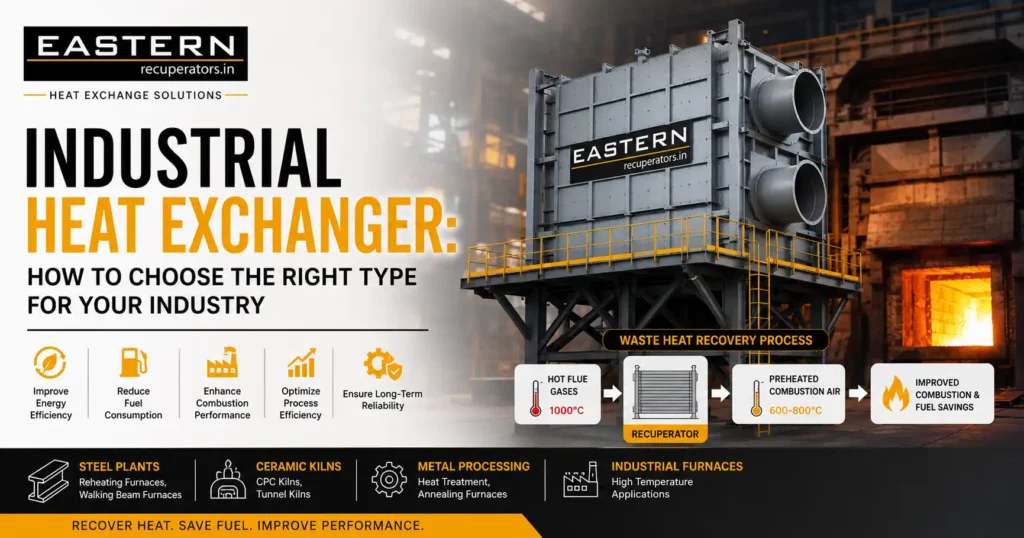
A recuperator is a heat-recovery mechanism that transfers the waste heat from hot exhaust gases to incoming combustion air. The goal is simple. Recapture the energy that would otherwise be wasted and use it to improve combustion efficiency.
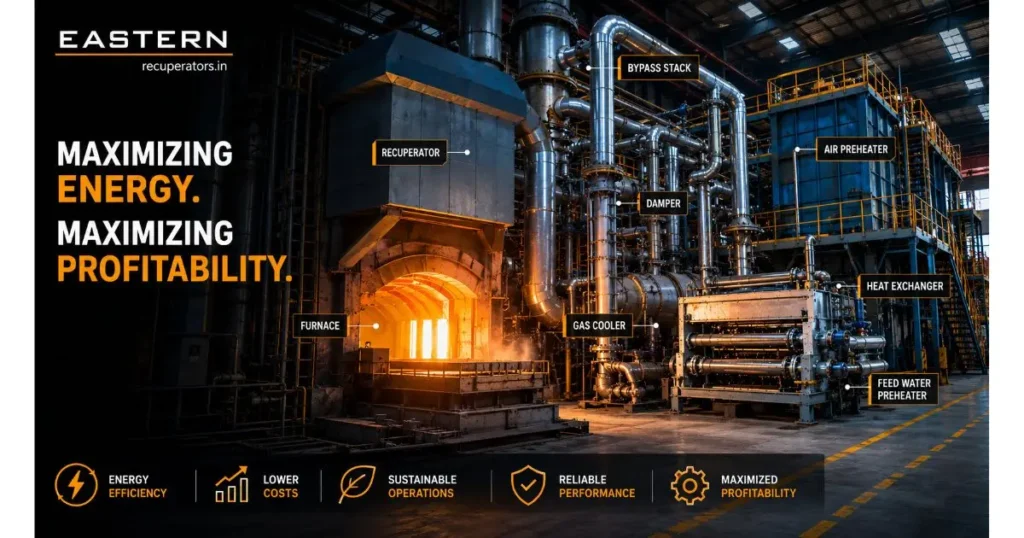
Manufacturers design and build recuperators specifically for high-temperature industrial applications that demand fuel efficiency. This renders them very useful in furnaces, kilns, boilers, and thermal processing units.
What Is a Heat Exchanger and How Does It Work?
To grasp the difference between the recuperator and the heat exchanger, it is also vital to understand what a heat exchanger is.
A heat exchanger is a general term for thermal equipment that transfers heat between two fluids without direct physical contact. These are fluids that can either be liquid or gas, depending on the use.
Industry relies on heat exchangers to cool, heat, condense, and maintain process temperatures. The major difference is that not all heat exchangers target combustion heat recovery.
Recuperator vs Heat Exchanger Working Principle
The principle of the recuperator is indirect heat transfer. A furnace releases hot flue gases, which exit the furnace through one side of the heat transfer surface, and cold combustion air, which exits the furnace through the opposite side. The heat flows across the barrier between the two streams.
The system then feeds this preheated air into the combustion chamber. The outcome is a decrease in fuel demand because combustion begins with hotter air. According to the U.S. Department of Energy, industrial heat recovery can reduce energy use significantly — making every efficiency gain count.
Heat Exchanger Working Principle
The heat exchanger operates on the principle of heat transfer but has a wider operating range.
Two fluids with different temperatures flow through separate channels. Specifically, heat moves from the hot fluid to the cold fluid through a separating surface. This process heats, cools, or stabilises process temperatures as needed. For example, in chemical processing, heat exchangers control the temperature of the fluids to be reacted.
Recuperator vs Heat Exchanger: Understanding the Core Difference
Viewing the recuperator vs heat exchanger through purpose and application makes the difference clearer.
- Purpose of Operation
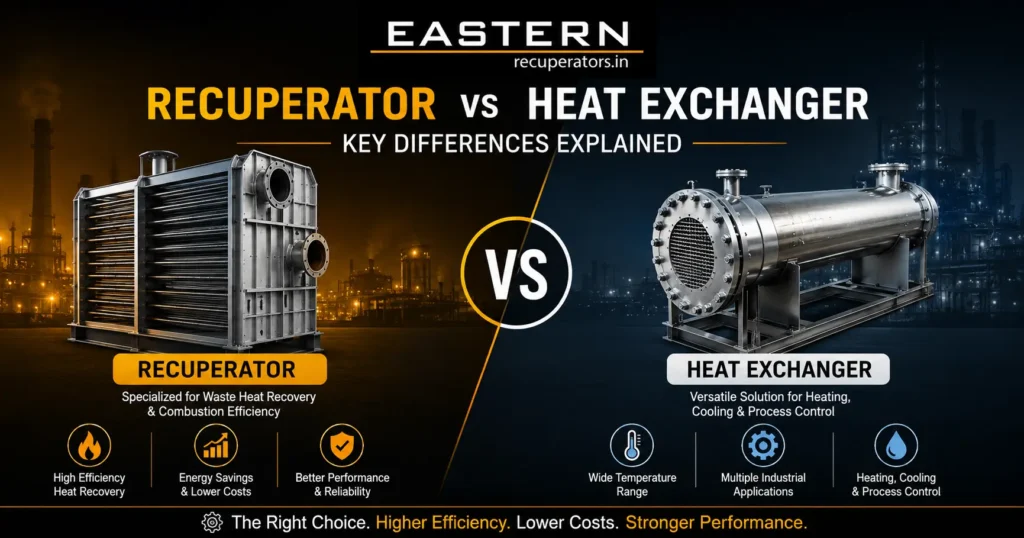
A recuperator is a special purpose heat recovery device that uses exhaust gases to recover heat to enhance combustion efficiency.A heat exchanger can be used in various ways which
include cooling, heating, and temperature regulation.
- Temperature Handling
Recuperators typically operate in high-temperature conditions. Depending on the system, heat exchangers cover low, medium, or high temperature ranges.
- Fuel Efficiency Role
Recuperators are a direct way to decrease the consumption of fuel by preheating the combustion air. Heat exchangers might enhance the process efficiency but do not necessarily have a direct effect on fuel combustion.
- Application Focus
Recuperators serve primarily thermal systems. Heat exchangers serve nearly all industrial sectors. Here, the difference between a recuperator and a heat exchanger comes into commercial consideration.
Recuperator vs Heat Exchanger in Industrial Applications
Knowing the applications in industry assists in determining when a recuperator is the most suitable option.
- Industrial Furnaces
Recuperators collect exhaust heat and enhance the combustion efficiency of the furnace systems.
- Steel Plants
The thermal efficiency of steel production is very high, and recuperators are very important in optimising fuel.
- Glass Manufacturing
Glass melting is a high-temperature process during which heat savings enhance cost effectiveness.
- Ceramic Kilns
Recuperators are used in kilns to minimise the amount of energy wasted and to stabilise the temperature.
The waste heat recovery in these industries has direct effect on the profitability.
Heat Exchanger Applications Across Industrial Processes
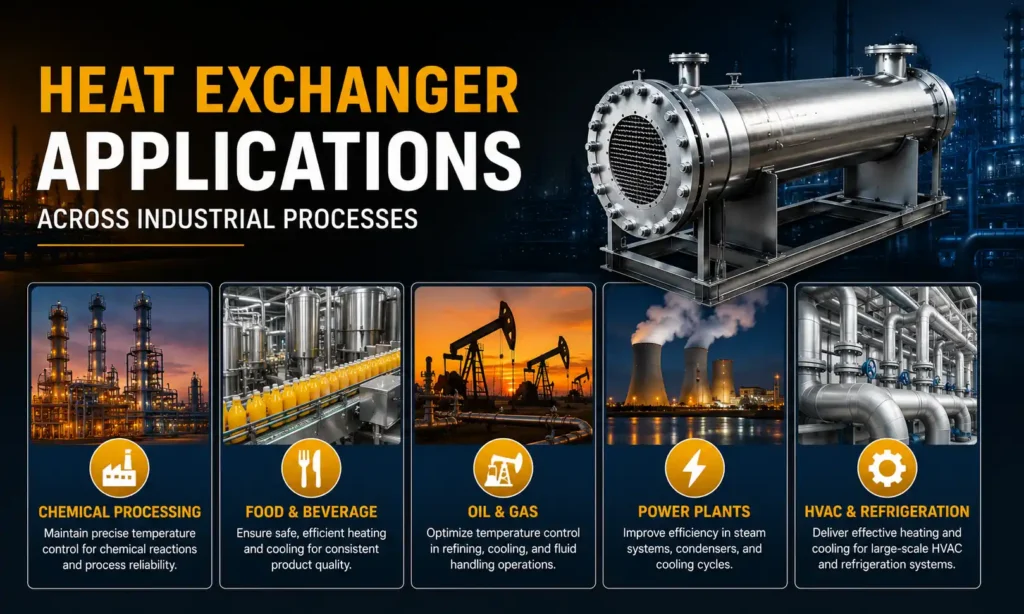
The variety of applications of heat exchangers in industry is far greater.
Chemical Processing
Heat exchangers control process temperatures during chemical reactions.
Food Processing
Food processing plants use heat exchangers to heat and cool products safely and efficiently.
Oil and Gas
Critical in the refinement, cooling and control of the temperature of fluids.
Power Plants
Applied in steam systems, condensers, cooling cycles.
Although capable of doing many things, these applications are quite different than combustion heat recovery.
Recuperator vs Heat Exchanger Efficiency Comparison
When you are interested in combustion efficiency, fuel savings, recuperators have higher returns since they directly reuse the waste heat. When you want to control or cool the temperature of a process, heat exchangers are the correct way to go.
This is the reason why the decision between the Recuperator vs heat exchanger should be initiated with the operational goals, rather than with a product familiarity. In fact, making the wrong choice easily leads to poor performance and higher running costs.
Recuperator vs Heat Exchanger Cost Comparison
Initial costs of recuperators can be higher due to specialised high-temperature materials and design
Depending on the application, heat exchangers can be less costly.
Nonetheless, recuperators in many cases provide quicker ROI with fuel savings.
In the case of high-temperature plants, the difference in costs is often compensated in the framework of operational savings. Lifecycle cost is to be considered by decision-makers, rather than the purchase price.
How to Choose Between Recuperator vs Heat Exchanger
Technical clarity is needed when it comes to choosing between these systems.
Evaluate Heat Source
When waste exhaust heat is available, a recuperator is the right choice.
Define Process Goal
When you want to achieve combustion efficiency, select a recuperator. When the motive is to regulate the temperature, select a heat exchanger.
Consider Operating Temperature
High-temperature systems favour recuperators over general heat exchangers. Extended process systems can prefer heat exchangers.
Assess ROI Potential
Recuperators are more beneficial in fuel-intensive operations. This is the empirical method to the Recuperator vs heat exchanger choice.
Why Recuperator vs Heat Exchanger Selection Matters
The workload in industrial systems is razor-thin. Selecting the incorrect heat recovery system raises the cost of energy, decreases productivity, and affects profitability. The appropriate equipment enhances efficiency, extends the system’s lifespan, and supports long-term operational reliability.
The technical difference is not only an engineering choice. It is a business decision.This is the reason why expert guidance is important.
Conclusion
Recuperator vs heat exchanger is more than just a matter of terminology. It has a direct impact on the efficiency of industrial systems for heat use and recovery. A recuperator targets combustion heat recovery and fuel economy by design. Heat exchanger has more general thermal control applications in industries.
The correct decision will rely on your procedure, temperature scale, and your objective of energy. In the case of industries aimed at minimising fuel costs and maximising the use of waste heat, it is necessary to work with an appropriate technical partner.
EASTERN Recuperators specialises in sophisticated heat recovery systems for industries, offering high efficiency and performance. Furthermore, our engineering expertise helps industries adopt high-performance recuperators built for long-term results.
Frequently Asked Questions (FAQ)
What is the main difference in Recuperator vs heat exchanger?
The key distinction between Recuperator and heat exchanger lies in the purpose. Recuperators handle waste-heat recovery to improve combustion efficiency, whereas heat exchangers handle more general heating and cooling problems.
What is a recuperator used for?
A recuperator recovers heat from exhaust gases and preheats the combustion air, which consumes less fuel than the exhaust gases and has a higher thermal efficiency than the exhaust gases.
What is a heat exchanger used for?
A heat exchanger transfers heat between fluids — heating, cooling, or maintaining process temperatures across various industrial applications.
Which is better for industrial fuel savings?
In thermal systems that consume large amounts of fuel, recuperators are a better choice because they directly increase combustion efficiency by utilising waste heat.
Are recuperators and heat exchangers the same?
No, they are not alike. A recuperator, a specialised heat-recovering device, and a heat exchanger, a more general thermal transfer device are used in many industries.