Energy is no longer just a cost center. It is a controllable lever for margin expansion, operational stability, and long-term competitiveness. In 2026, plant managers’ target is to achieve energy intensity reductions while producing their required output, meeting their emissions targets, and avoiding costly full equipment upgrades. The waste heat recovery system provides a solution that meets all three main objectives of the project.
Across cement, steel, glass, chemicals, and power plants, 20-50% of input energy is lost as heat through flue gas streams, cooling circuits, and process exhausts. Fortunately, this energy loss can be tracked, recovered, and monetized.
Specifically, this guide is built for decision makers who want clarity on how waste heat recovery translates into real savings, where to implement it, and how to structure it as a high-return investment.
Understanding Industrial Waste Heat Recovery Opportunities
Every thermal process releases heat that does not contribute to production output. In fact, only a small part of input energy gets transformed into useful work in furnaces, kilns, boilers, and dryers. Instead, the remaining energy escapes as hot gases, surfaces, or fluids.
Most plants release this energy because their systems use existing equipment without proper system integration design. However, plants can now use modern waste-heat utilization technologies to recover and reuse this energy in their main operations.
For plant leadership, therefore, this is not primarily an environmental initiative. The organization uses its current assets to implement a program that improves efficiency while reducing costs.
What Is a Waste Heat Recovery System?
A waste heat recovery system captures thermal energy from exhaust streams and converts it into usable operational energy for the facility. The recovered energy serves steam generation, combustion air preheating, electricity production, and process heating.
The system uses controlled heat transfer to function. Specifically, high-temperature sources such as flue gases transfer energy through heat exchangers or recovery boilers to a secondary medium. The recovered heat is transferred to another medium, which is then reused in plant operations.
The waste heat recovery system requires proper engineering to ensure that it does not interrupt production activities. The system improves the plant’s energy performance while reducing its reliance on primary fuel sources.
Key Sources of Waste Heat in Plants
Identifying high value recovery points is the first step toward implementation. The following sources typically offer the highest recovery potential:
- Flue gas streams from furnaces, kilns, and boilers
- Exhaust air from dryers and process vents
- Cooling water circuits and condenser systems
- Steam condensate and blowdown losses
- High temperature equipment surfaces
Among these, flue gas heat recovery consistently delivers the highest returns because of its high temperature and continuous flow.
Types of Industrial Waste Heat Recovery Systems
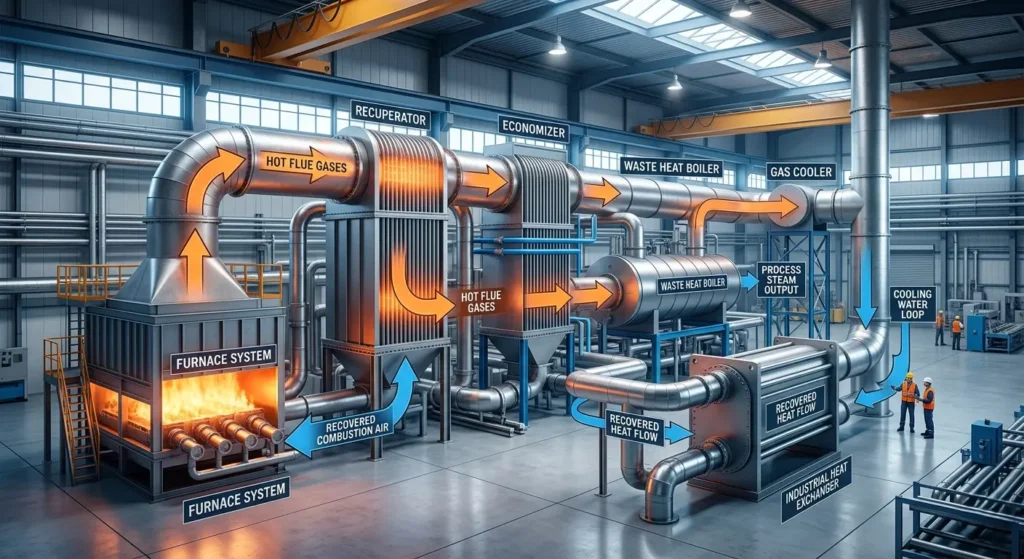
Different industries need recovery strategies that are different from each other because temperature levels and process requirements and operational constraints of their operations create specific requirements.
Recuperators and Regenerators
These systems recover heat from flue gases to preheat combustion air, improving efficiency and reducing harmful emissions.
Waste Heat Boilers
These devices absorb the exhaust heat to produce steam that can either power a turbine and generate electricity, or provide process heat.
Economizers
Economizers are installed in the boiler system which use the flue gas heat to preheat feedwater which results in saving of the energy required for steam generation.
Organic Rankine Cycle Systems
The systems enable electricity generation from waste heat which occurs at low to medium temperatures. This capability makes the systems suitable for industries which produce continuous heat emissions.
Heat Pumps
Heat pumps serve to elevate low temperature waste heat into industrial process usable heat.
The selection process for appropriate systems requires assessment of three factors which include temperature range and flow rate and waste heat source reliability.
Key Benefits of a Waste Heat Recovery System
Waste heat recovery stands out as a worthwhile business investment when synchronized with the industrial plant’s operations.
- Direct reduction in fuel consumption, lowering energy expenditure across production cycles
- Improved thermal efficiency, stabilizing process performance and reducing variability
- Lower emissions footprint, supporting compliance and ESG commitments
- Additional usable energy capacity, enabling production scaling without proportional energy increase
- Extended equipment life, reducing thermal stress and improving operational reliability
For leadership teams, the outcomes mean stronger profit margins, better compliance, and improved asset efficiency.
Waste Heat Recovery System: Implementation Challenges
Every recovery project requires engineers to address both engineering needs and operational needs. Early solution of these issues leads to enhanced performance which lasts over time.
Variability in Heat Streams
Recovery efficiency experiences reductions when temperature and flow rates change. As a result, the system maintains consistent performance through advanced controls and correct system design.
Integration with Existing Systems
Legacy plant layouts restrict the ability to install new systems. The use of modular designs together with phased deployment methods enables system integration while maintaining operational activities.
Corrosion and Material Durability
Flue gas environments frequently contain substances that cause material degradation. Therefore, selecting superior materials and protective coatings extends system lifespan significantly.
Trends Shaping Waste Heat Recovery in 2026
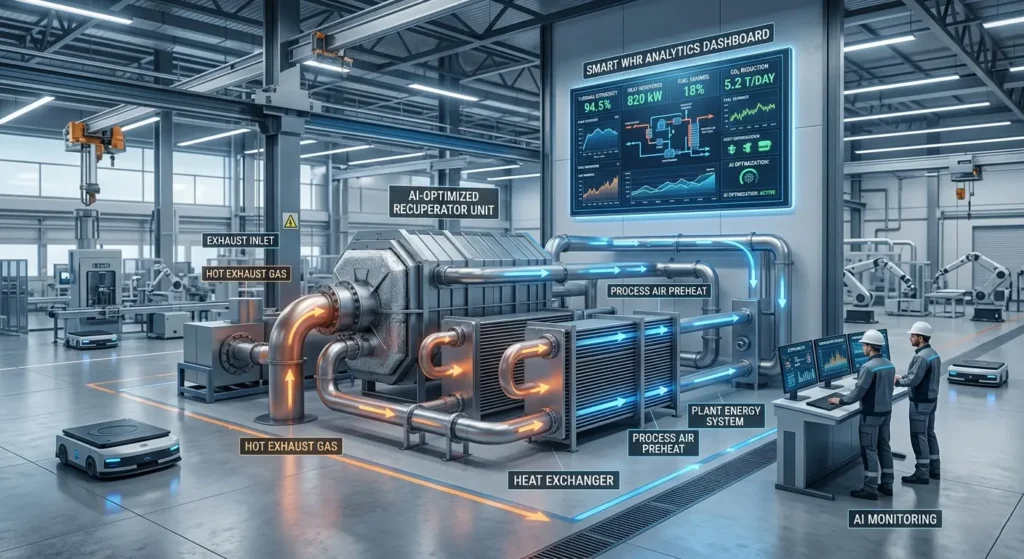
Industrial energy strategies now use advanced data analysis to make waste heat recovery their most vital operational requirement.
Real Time Monitoring for Performance Optimization
Modern systems provide continuous visibility into performance. The system uses real time data to identify inefficiencies and maintain steady recovery performance.
AI Driven Predictive Maintenance
AI systems use predictive analytics to forecast when equipment will break down. Consequently, this minimizes operational interruptions while enhancing equipment reliability.
Hybrid Recovery System Configurations
Plants use multiple technologies to capture waste heat across various temperature levels, which leads to increased operational efficiency and financial benefits.
Rising Regulatory Pressure on Emissions
The industry is moving toward zero emissions because stricter emission standards require organizations to implement waste heat recovery systems, which decrease fuel consumption and help them meet environmental regulations.
Turn Waste Heat into Measurable Performance Gains
The process of recovering waste heat requires more than just equipment installation. In addition, the process needs accurate engineering, complete process knowledge, and proper connection to existing plant functions. The difference between projected savings and actual results depends on how well the system is designed and executed.
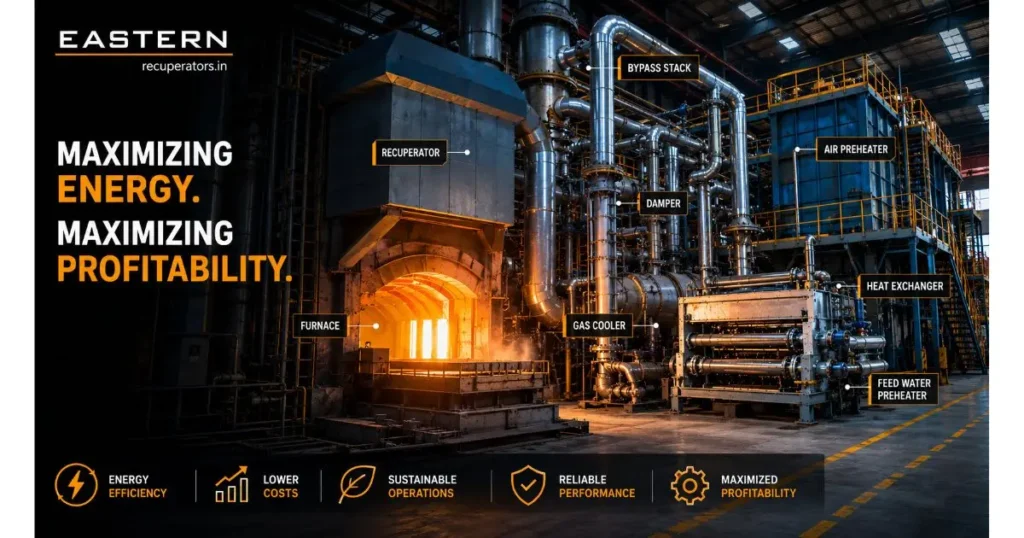
Recuperator solutions play a critical role in maximizing heat recovery efficiency, especially in high-temperature applications like furnaces and kilns. The correct design approach enables plants to achieve lower fuel consumption rates while maintaining stable operations and consistent production output.
EASTERN Heat Transfer Pvt. Ltd. develops waste heat recovery solutions that match actual plant conditions through its application specific solutions. The performance assessment process starts with a detailed feasibility study which leads to the design of custom recuperators and the complete implementation of the system.
The company provides engineering expertise to optimize energy usage and decrease operational expenses through its engineering capabilities which enable clients to achieve their recovery potential.
Conclusion
Industrial operations experience energy-efficiency losses and profitability declines because they fail to recover heat lost. Through a properly designed waste heat recovery system plants achieve energy savings while their processes maintain stability and their overall cost management improves without significant impact on their daily operations.
The actual outcome depends on how well the execution process proceeds. The system design together with its integration and reliability aspects determines the system performance stability which operators can expect to achieve. Recuperator provides plant managers with the needed expertise to customize recovery solutions that transform energy waste into operational improvements and sustainable business benefits.
Frequently Asked Questions (FAQs)
What industries benefit the most from a waste heat recovery system?
Among several industries that are characterized by continuous processes featuring elevated temperatures like steel, glass, cement, and chemicals, the highest returns were recorded because of heat recovery.
What is waste heat utilization in simple terms?
Waste heat utilization describes the process of capturing industrial thermal energy that remains unused for industrial processes to use in generating heating and electricity power.
How effective is flue gas heat recovery?
Flue gas heat recovery process achieves its highest efficiency through the combination of high exhaust stream temperatures and their continuous operation, which makes it one of the most effective recovery techniques.
Can waste heat recovery systems be customized?
Yes, systems are engineered considering plant-specific conditions like temperature range, process design, and energy demand.
Is industrial waste heat recovery suitable for small plants?
Certainly smaller plants may sooner adapt scaled solutions to their heat profiles or operational requirements.